

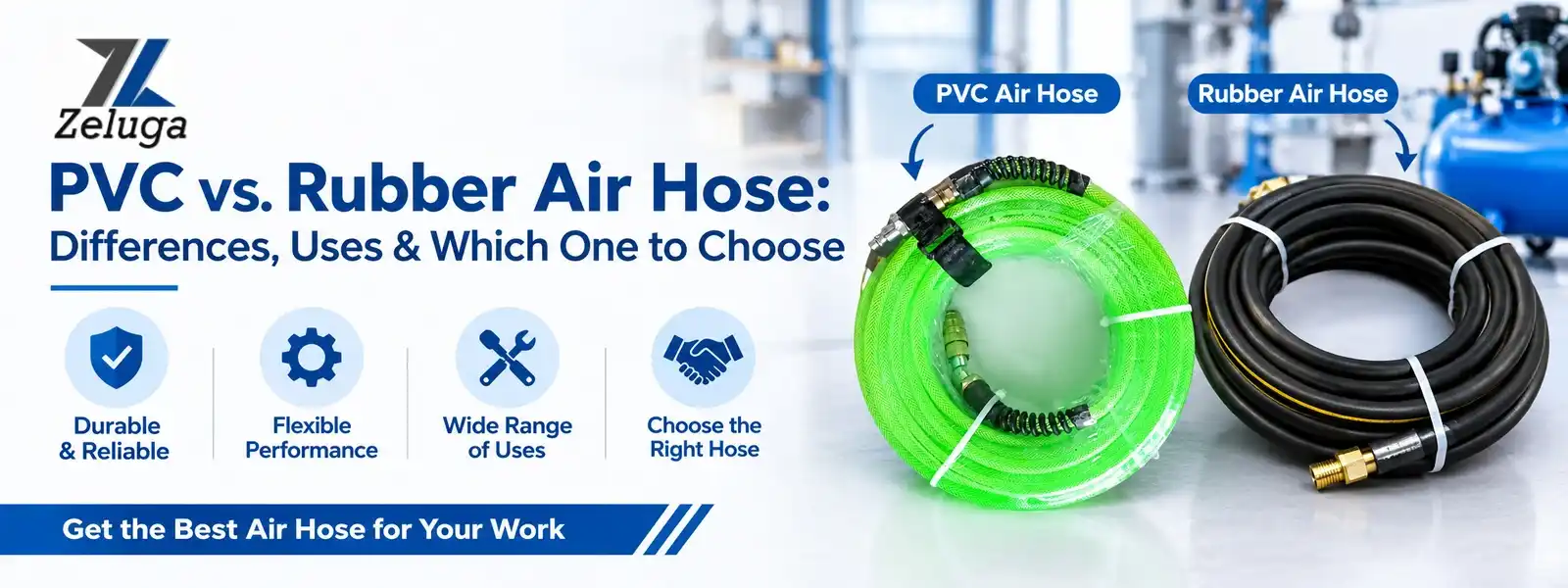
When using air-powered tools it is important to consider what type of air hose to use. Both PVC and rubber air hoses can be common choices, however one may be more suitable for your regular workshop use and the other may be able to withstand harsher conditions. Consider the flexibility, weight, operating temperature, toughness and pressure rating of both materials to choose which would be best for your application.
What Is a PVC Air Hose?
PVC air hoses are made from polyvinyl chloride which is a synthetic plastic material. They are often used to carry compressed air from an air compressor to pneumatic equipment. Many PVC air hoses have an additional reinforcement. Generally, they are lightweight and easy to handle and are suitable for general use where the hose does not need to be extremely flexible.
Also Read: Air Hose and the Benefits of Using Compressed Air
What Is a Rubber Air Hose?
Rubber air lines can be manufactured from either natural or synthetic rubber to carry compressed air. They may be reinforced with textile layers for pressure handling and strength. Compared to PVC, rubber air lines tend to be heavier, but many have good flexibility and abrasion resistance. They are typically used in workshop environments, building sites and industrial environments.
PVC vs. Rubber Air Hose: Key Differences Compared
| Comparison Factor | PVC Air Hose | Rubber Air Hose |
| Material | Polyvinyl chloride | Natural or synthetic rubber compounds |
| Weight | Generally lighter | Generally heavier |
| Flexibility | Varies by formulation | Generally offers good flexibility |
| Cold-weather performance | Some types become stiff | Many types retain flexibility better |
| Heat resistance | Depends on product rating | Depends on rubber compound |
| Abrasion resistance | Varies with construction | Many types offer good resistance |
| Portability | Easier to carry in many cases | Can require more effort to move |
| Initial cost | Often more affordable | Often more expensive |
| Common uses | General-purpose air applications | Workshops and demanding applications |
Also Read: Polyurethane vs PVC Air Hose: Which One Is Better for Contractors, Air Compressors & Industrial Use?
Flexibility and Ease of Handling
PVC hoses are generally easy to carry, but some can feel stiff when you bend or reposition them. Rubber hoses allow for greater flexibility than PVC hoses and so may make handling of the equipment easier during normal operation.
Also Read: Flexible Air Hose: Types, Uses, Applications & Selection Guide
Cold-Weather and Temperature Performance
While some PVC air hoses can get very stiff in cold conditions, many rubber air hoses will retain flexibility. Check with the manufacturer to confirm the minimum and maximum operating temperatures.
Durability and Abrasion Resistance
Hoses can be damaged by dragging along concrete, coarse surfaces and equipment. Many rubber hoses are resistant to damage; however, this property will depend on the compounds, reinforcement and outer cover of the hose.
Weight and Portability
PVC is lighter than rubber, therefore it can be easily carried between different stations in the garage. Rubber may be difficult to move and store frequently in long jobs.
Pressure Rating and Performance
The working pressure rating must be considered carefully. Ensure that the hose is compatible with both the air compressor and accessories. Never exceed the bursting pressure as the normal operating pressure.
Resistance to Oil, Chemicals, and Environmental Exposure
Oil, grease, UV radiation and chemicals may affect the material of hoses. Both PVC and rubber have varying degrees of resistance. Check the manufacturer’s compatibility information before using either hose around specific substances.
Cost and Long-Term Value
PVC flexible hoses are more economically priced and ideal in many general-purpose applications. Rubber hoses may be more expensive, however due to their increased flexibility and durability, they are justified in demanding working conditions.
Advantages of PVC Air Hoses
PVC hoses offer several benefits when you need a lightweight and economical option. However, their performance depends on the quality, construction, and conditions in which you use them.
1. Lightweight Construction
PVC hoses are generally lighter than comparable rubber hoses. You can carry them between workstations with less effort. This makes them useful when portability matters during routine compressed air tasks.
2. Economical Option
PVC hoses often have a lower initial purchase cost. If you need several hoses for general-purpose applications, they can help manage equipment expenses without automatically choosing a more expensive material.
3.Easy Storage and Movement
Their lighter construction makes PVC hoses easier to coil, carry, and store. This can help when you regularly move equipment around a workshop or need to keep work areas organized.
Benefits of Rubber Air Hoses
Rubber hoses are commonly selected for applications involving regular handling and demanding working conditions. However, their weight, cost, and material compatibility still matter when you compare them with other options.
1.Good Flexibility
Many rubber hoses remain flexible during regular handling. You can move them around equipment and workstations more easily, particularly when the hose needs frequent repositioning throughout a working day.
2. Good Abrasion Resistance
Certain rubber compounds provide good resistance to surface wear. This makes suitable rubber hoses useful in workshops and construction environments where hoses may come into contact with floors and equipment.
3. Better Cold-Weather Flexibility
Many rubber formulations retain flexibility better than standard PVC in colder conditions. This can make handling easier during outdoor work, although you should always verify the product’s minimum operating temperature.
Also Read: Air Hose and the Benefits of Using Compressed Air
PVC vs. Rubber Air Hose: Which One Should You Choose?
The right choice depends on how you use your air hose, how often you move it, and the conditions it faces. Neither material is better for every application. Consider the following situations before making your decision.
Choose PVC
Choose PVC if you need a lightweight, economical hose for general-purpose compressed air applications. It can suit home garages, light workshop tasks, and occasional use. Make sure its pressure and temperature ratings match your requirements.
Choose Rubber
Consider rubber if your hose gets moved frequently, works around rough surfaces, or needs to remain flexible in colder conditions. It can suit busy workshops and demanding applications, provided its specifications match your equipment.
Also Read: 1/4 Air Hose vs 3/8 Air Hose: Which Size Should You Choose for Air Compressors?
Polyurethane vs PVC Air Hose: Which One Is Better for Contractors, Air Compressors & Industrial Use?
When Should You Consider Other Air Hose Materials?
Consider hybrid polymer or polyurethane hoses if PVC feels too stiff or rubber feels too heavy for your work. These materials offer different handling characteristics, but you still need to check pressure, temperature, and compatibility ratings.
Important Factors to Check Before Buying an Air Hose
Choosing the material is only one part of the decision. You also need to check the hose specifications against your compressor, pneumatic tools, and working environment.
Working Pressure and Burst Pressure
Check the hose’s rated working pressure before connecting it to your compressor. Burst pressure indicates the pressure at which failure occurs under specified test conditions. Never use burst pressure as your operating limit.
Hose Inner Diameter
The inner diameter affects how much air can flow through your hose. Common sizes include 1/4-inch, 3/8-inch, and 1/2-inch. Choose a diameter that meets your tool’s airflow requirements.
Hose Length
Longer hoses offer more reach, but they can increase pressure drop, especially with smaller inner diameters or high airflow demands. Select a length that reaches your work area without unnecessary excess.
Operating Temperature Range
Check the manufacturer’s minimum and maximum operating temperatures. Your hose must handle the temperatures it will experience during use. This matters particularly when you work outdoors or in temperature-controlled industrial environments.
Fittings and Connections
Check the fitting type, thread size, and connection compatibility before ordering. Common connections include NPT fittings in the US. Incorrect fittings can cause air leaks, poor connections, and unnecessary replacement work.
Hose Reinforcement and Construction
Check whether the hose includes textile or other reinforcement layers. Reinforcement supports pressure handling and structural strength. Also consider the outer cover, as it affects how well the hose handles everyday contact and wear.
Manufacturer Specifications and Quality
Review the product documentation for working pressure, temperature range, diameter, material compatibility, and intended applications. Do not assume two hoses made from the same material offer identical performance. Compare their actual specifications.
Also Read: Best Air Hose Manufacturer & Supplier in USA – Zeluga
Choose Zeluga for Your Air Hose Supply Requirements
Looking for an air hose supplier for your business or bulk requirements? Zeluga offers air hose supply solutions for professional and industrial applications. Whether you need hoses for workshops, construction, or manufacturing, contact our team to discuss your requirements, product specifications, and wholesale supply needs.
Conclusion: PVC or Rubber Air Hose, Which Is Right for You?
PVC and rubber air hoses serve different working requirements. PVC is often a suitable choice when you prioritize lower weight and initial cost. Rubber deserves consideration when flexibility, frequent handling, and demanding conditions matter more.
Before purchasing, compare working pressure, inner diameter, hose length, temperature range, and fitting compatibility. These specifications matter just as much as the material itself. If you are purchasing for a workshop or industrial operation, evaluate the actual working conditions before placing a bulk order.
Frequently Asked Questions
Can you connect two air hoses to increase their length?
Yes, provided both hoses, fittings, and connections are compatible and rated for your system’s working pressure.
Does sunlight affect PVC and rubber air hoses?
Yes. Prolonged UV exposure can degrade some formulations. Check whether the hose cover is rated for outdoor exposure.
Can you use an air hose for liquids?
Not automatically. Air hoses are designed for specific applications. Use a hose rated for the liquid and its chemical compatibility.
Should you depressurize an air hose before disconnecting it?
Yes. Shut off the air supply and release trapped pressure using the appropriate procedure before disconnecting fittings or removing the hose.
Can you repair a damaged compressed air hose?
Only if the manufacturer permits an approved repair method. Replace hoses with structural damage, exposed reinforcement, or unsafe connections.