

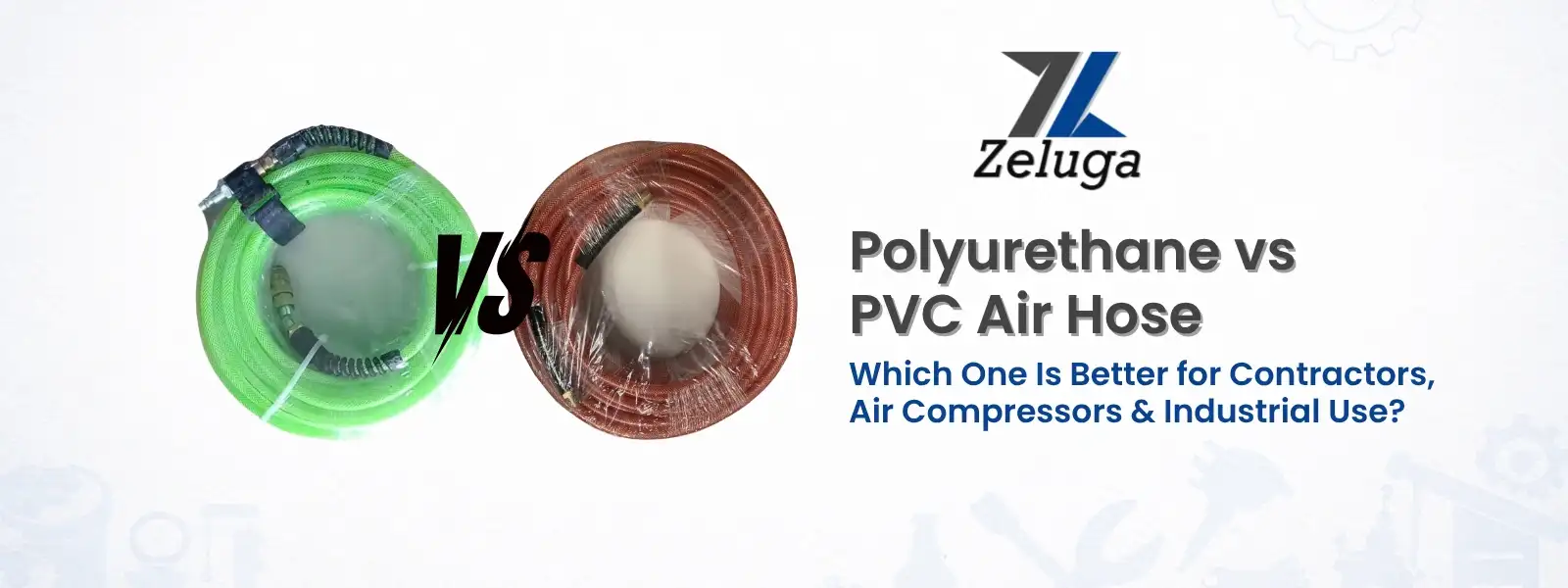
If you are choosing an air hose, one of the most common questions is whether a polyurethane hose or a PVC hose is the better option. The answer depends on how the hose will be used, the working environment, and the level of durability required.
At Zeluga, we manufacturer and supplier of high-grade polyurethane and PVC air hoses across the USA. Based on years of experience with pneumatic equipment, we can say that neither material is universally better.
The right air hose depends on the application, operating conditions, flexibility requirements, and budget. This guide explains the key differences so you can make an informed decision.
What Is a Polyurethane Air Hose?
A polyurethane air hose is a flexible pneumatic hose designed for demanding work environments where mobility and durability are important. Compared to many traditional hose materials, polyurethane offers excellent flexibility while maintaining strength under regular use. This makes it a popular choice for contractors, technicians, and industrial operators.
A quality polyurethane air hose is often used in air compressor applications where frequent movement is required. Its lightweight design helps reduce operator fatigue, while its resistance to kinks and abrasion makes it suitable for busy job sites.
At Zeluga, our polyurethane hose range includes lightweight air hose options, reinforced air hose models, and industrial-grade assemblies with couplers and safety plugs.
What Is a PVC Air Hose?
A PVC air hose is a cost-effective solution commonly used for general pneumatic applications. PVC, or polyvinyl chloride, is widely used because it provides reliable performance while remaining affordable for businesses purchasing in larger quantities.
Many workshops, distributors, and equipment suppliers choose PVC products for standard air compressor hose requirements. Transparent designs also allow users to visually inspect the hose during operation. Zeluga supplies PVC air hose products in multiple colours and configurations, including 1/4 air hose options suitable for workshops, garages, and manufacturing environments.
Polyurethane vs PVC Air Hose: Side-by-Side Comparison
| Feature | Polyurethane Air Hose | PVC Air Hose |
| Flexibility | Excellent | Good |
| Weight | Lightweight | Moderate |
| Kink Resistance | High | Moderate |
| Abrasion Resistance | Excellent | Good |
| Cold Weather Performance | Excellent | Moderate |
| Durability | High | Good |
| Ease of Handling | Excellent | Good |
| Cost | Higher Initial Cost | Lower Initial Cost |
| Contractor Applications | Excellent | Good |
| Industrial Applications | Excellent | Good |
| General Workshop Use | Excellent | Excellent |
| Long-Term Value | High | Good |
Flexibility Comparison: Which Air Hose Is Easier to Work With?
Polyurethane offers superior flexibility, making it easier to move around equipment, ladders, vehicles, and workstations. For technicians who constantly reposition pneumatic tools, a polyurethane hose typically remains easier to manage throughout the day. This flexibility also reduces the likelihood of interruptions caused by twisting or tangling.
PVC provides acceptable flexibility for many standard applications but can feel stiffer compared to polyurethane, especially when used repeatedly in active work environments. For stationary systems or general workshop use, PVC remains a practical choice, but users often notice the difference when comparing both materials side by side.
Durability Comparison: Which Hose Lasts Longer?
Polyurethane is generally recognised for its ability to withstand daily wear. It offers excellent resistance to abrasion, dragging, and repeated movement. In environments where the air hose is constantly exposed to rough surfaces, polyurethane can provide a longer service life.
PVC performs reliably for many general applications but may show signs of wear sooner under demanding conditions. For businesses that need an industrial air hose for intensive use, polyurethane often delivers greater long-term durability and reduced replacement frequency, which can improve overall operational efficiency.
Polyurethane vs PVC Air Hose for Air Compressors
A polyurethane hose works exceptionally well as an air hose for compressor systems where mobility and flexibility are priorities. Contractors and technicians often prefer it because it moves easily with pneumatic tools while helping maintain productivity on busy sites.
PVC is also widely used as an air compressor hose and performs effectively in workshops, garages, and manufacturing facilities. For general-purpose compressed air hose applications where cost control is important, PVC remains a dependable option. Both materials can support common pneumatic operations when selected correctly for the intended environment.
Which Air Hose Is Better for Contractors?
For contractors, polyurethane is often the preferred option because it combines flexibility, durability, and ease of handling. A contractor air hose must withstand constant movement, transportation, and demanding working conditions.
Whether used as a construction air hose or roofing air hose, polyurethane typically provides better performance where mobility is essential. PVC remains suitable for lighter-duty work, but many professional users favour polyurethane for daily field operations.
Which Air Hose Is Better for Industrial Use?
Industrial environments require products that can perform consistently while minimising downtime. A polyurethane hose is often selected when flexibility, abrasion resistance, and long-term durability are critical. However, many facilities successfully use PVC systems for standard pneumatic operations.
The ideal industrial air hose depends on operating conditions, traffic levels, maintenance requirements, and overall budget considerations. Both materials have proven applications across manufacturing and workshop environments.
Cost vs Value: Looking Beyond the Purchase Price
PVC generally has a lower upfront cost, making it attractive for buyers managing large inventories or supplying standard workshop applications. For distributors and wholesalers, a PVC hose can be an economical option when customers prioritize affordability over premium performance. This is one reason why Zeluga continues to supply multiple PVC configurations for different market segments.
Polyurethane usually costs more initially but often delivers greater long-term value. Its flexibility, durability, and resistance to wear can reduce replacement frequency. For businesses that use an air hose daily in demanding environments, the overall ownership cost may be lower over time despite the higher purchase price.
When Should You Choose a Polyurethane Air Hose?
Frequent Movement
Choose polyurethane when operators regularly move tools around workstations, vehicles, and active job sites. Its flexibility improves usability and helps reduce interruptions during demanding pneumatic tasks.
Cold Working Conditions
Polyurethane maintains flexibility better than many alternative materials when temperatures change. This makes it suitable for businesses operating across different environments throughout the year.
Long-Term Durability
Where abrasion, dragging, and repeated use are common, polyurethane can offer a longer service life. Many buyers select it to reduce maintenance and replacement requirements.
When Should You Choose a PVC Air Hose?
Budget-Conscious Projects
PVC remains an excellent choice when cost control is a primary concern. It provides dependable pneumatic performance while helping businesses manage procurement budgets effectively.
General Workshop Use
For routine pneumatic operations, PVC delivers reliable performance. Many workshops, garages, and maintenance facilities successfully use PVC solutions every day.
Standard Air Systems
Where extreme flexibility is not required, PVC performs effectively in many compressed air systems and routine industrial environments.
Zeluga Polyurethane and PVC Air Hose Solutions
As a manufacturer and supplier, Zeluga offers a complete range of pneumatic hose products designed for distributors, wholesalers, retailers, and industrial buyers.
Polyurethane Air Hose Range
1. Z-Lite Polyurethane Air Hoses
- 21-342 Z-Lite Polyurethane Non-Transparent & Without Wire Reinforced Air Hose, Orange
- 21-314 Z-Lite Polyurethane Non-Transparent Air Hose Extremely Light Weight
2. Polyurethane Air Hose Combos
3. Z-Flex Reinforced Polyurethane Air Hoses
- Zeluga 21-485 Z-Flex Reinforced Polyurethane Air Hose 300 PSI, 3/8″ ID, 100ft.
- Zeluga 21-484 Z-Flex Reinforced Polyurethane Air Hose 300 PSI, 3/8″ ID, 50ft.
4. Z-Flex Polyurethane Air Hoses with Ball Swivel Coupler & Air Safety Plug
- 21-313 Z-Flex Ball Swivel Coupler & Air Safety Plug Polyurethane Air Hose
- 21-305 Z-Flex Ball Swivel Coupler & Air Safety Plug Polyurethane Air Hose
5. Z-Flex Reinforced Polyurethane Air Hoses with Ball Swivel Coupler & Air Safety Plug
- 21-306 Z-Flex Ball Swivel Coupler and Air Safety Plug Reinforced Polyurethane Air Hose
- 21-308 Z-Flex Ball Swivel Coupler and Air Safety Plug Reinforced Polyurethane Air Hose
PVC Transparent Air Hoses
- 21-310 1/4in. x 100ft. PVC Transparent Air Hose, Transparent Yellow
- 21-311 1/4in. x 100ft. PVC Transparent Air Hose, Transparent Green
- 21-312 1/4in. x 100ft. PVC Transparent Air Hose, Transparent Blue
- 21-309 1/4in. x 100ft. PVC Transparent Air Hose, Transparent Red
Air Hose Accessories
To support complete pneumatic systems, Zeluga also supplies:
- Ball swivel coupler assemblies
- Air safety plugs
- Air hose connector solutions
- Air hose coupler components for secure connections
Whether customers require a flexible polyurethane system or a practical PVC solution, Zeluga provides dependable products backed by years of manufacturing expertise.
Partner with Zeluga for Reliable Air Hose Solutions
If you are sourcing air hose products for distribution, retail supply, industrial operations, or equipment sales, our team can help you select the right solution. Zeluga works with wholesalers, distributors, procurement teams, and industrial buyers throughout the USA, supplying high-quality pneumatic products in volume.
Contact our team today to discuss bulk purchasing requirements, product specifications, and supply opportunities tailored to your market.
Conclusion
When comparing polyurethane and PVC, there is no single winner for every application. A polyurethane air hose generally provides superior flexibility, handling, and durability, making it ideal for professional users and demanding environments. A PVC air hose offers reliable performance and excellent value for standard pneumatic operations.
The best choice depends on how the hose will be used, who will use it, and the conditions in which it will operate. By offering both product categories, Zeluga helps distributors, wholesalers, and industrial buyers select the right air hose solution for their customers and applications.
FAQs
1. Is polyurethane better than a rubber air hose?
Polyurethane is typically lighter and more flexible, while rubber may provide advantages in some heavy-duty environments.
2. What size air hose is most commonly used?
Many pneumatic applications use 1/4-inch and 3/8-inch hose sizes depending on airflow requirements.
3. Do transparent hoses offer any benefits?
Yes. Transparent designs allow users to visually inspect the hose and monitor its condition more easily.
4. Can reinforced hoses handle demanding applications?
Yes. A reinforced air hose is designed to provide additional strength and durability in tougher environments.
5. Why are couplers important in pneumatic systems?
Quality couplers help create secure connections, improve safety, and support consistent airflow throughout the system.