
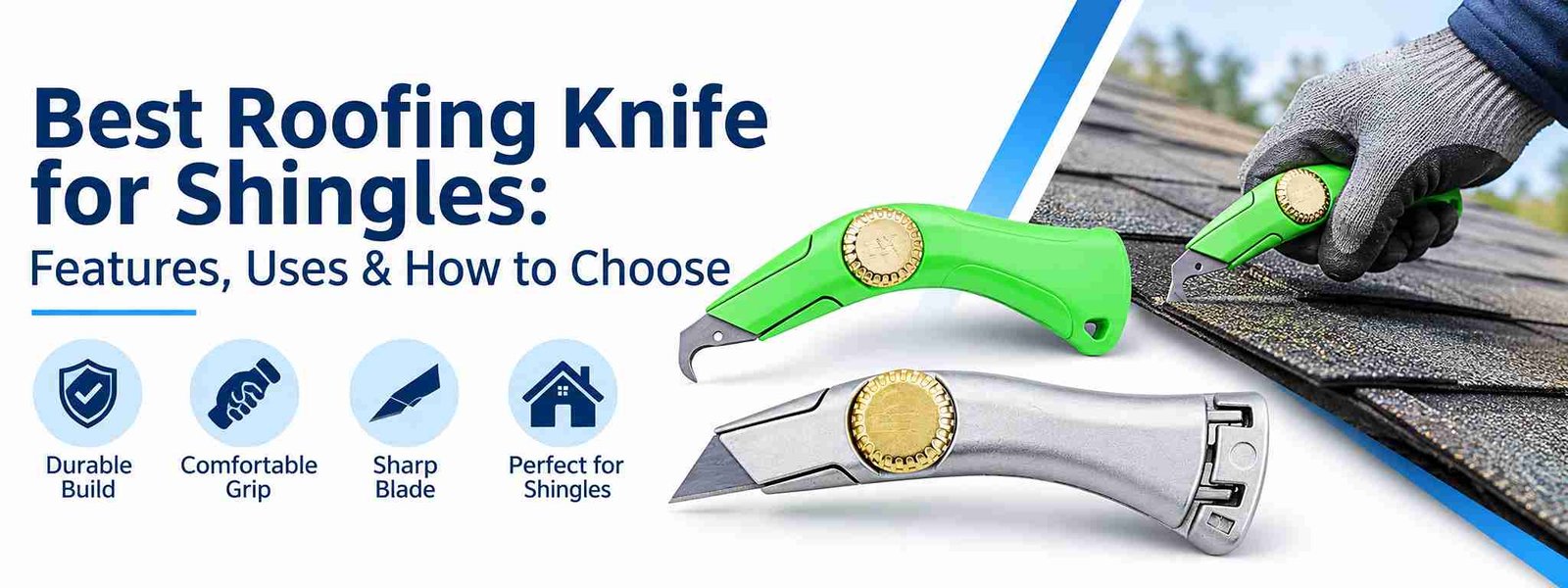
A professional roofing knife is needed to cut shingles. This is because, regardless of whether one is cutting asphalt shingles or removing them and trimming the edges, the knife will determine the efficiency and pace of your work.
There are different types of roofing knife designs, which generally include fixed-blade and hook-blade. By understanding the features and blade compatibility of roofing knives, you can select the right roofing knife for the jobsite.
What Is a Roofing Knife and Why Is It Used for Shingles?
A roofing knife is a specialized cutting tool that is meant for cutting, trimming and shaping roofing materials. These tools are frequently used by roofers while working with asphalt shingles to remove any damaged parts and adjust the materials on roof lines and valleys. Unlike conventional blades, roofing blades come in various designs depending on particular purposes of using them. Proper selection of the design allows better control of the blade.
What Makes a Roofing Knife Suitable for Cutting Shingles?
Not all cutting knives are ideal for roofing purposes. You should think about the blade shape, handle shape, possibility of replacement, and general construction of the knife. It will determine how easy it is to handle the knife and its suitability for your cutting requirements.
Blade Design and Cutting Requirements
The design of blades affects the way roofing knives cut materials. There are fixed blades and curved hook blades, both of which have different cutting styles. Selection of blades should depend on the thickness of the shingles, as well as the method of cutting. One blade design can perform effectively on one roofing type but not on other roofing materials.
Handle Grip and User Comfort
A lot of times when working on roofs, there is a need to keep cutting all day. The ease of using a handle will ensure that you have proper grip and control while doing this job. Consider the handle shape, surface and overall size before purchasing.
Safety Features and Blade Handling
Proper handling is possible only after you learn about the ways the blade is exposed, retained and stored. Choose those models that provide controlled handling and follow the manufacturer’s guidelines. Never allow your hands to come into contact with the cutting area. Use appropriate protective clothing and never use broken blades, even those with safe design.
Types of Roofing Knives Used for Shingle Cutting
Fixed Blade Roofing Knives
A fixed-blade roofing knife is a knife that has a blade permanently positioned at an angle. The applicability of this knife will depend on the geometry of the blade and the material being cut. You should consider the intended applications, handle design, and blade condition. before deciding to use it. Zeluga’s 19-124 Fixed Blade Roofing Knife is an option to consider when comparing dedicated roofing knife designs.
Hook Blade Roofing Knives
The hook blade features a curved cutting profile, which represents an alternative approach in dealing with compatible roofing materials. This type of blade is often used in situations where its hook-shaped cutting edge can meet the specified cutting requirements. Remember to ensure suitability before buying.
Zeluga offers the 19-130 Knuckle Saver Roofing Knife and 19-131 Fixed Blade Roofing Knife combinations with 100-piece hook blade packs. Check each product’s specifications to confirm the supplied blade configuration.
Roofer’s Shark Knives
A roofer’s shark knife can also be taken into account while looking at tools used in roofing. It is better to take into account how the blade is really shaped and what uses it serves rather than just the name itself. Zeluga’s 19-132 Roofer’s Shark Knife comes with a 100-piece hook blade combination, giving buyers an option to evaluate when comparing roofing knife packages.
Fixed Blade vs. Hook Blade Roofing Knife: Which Should You Choose?
| Comparison factor | Fixed Blade Roofing Knife | Hook Blade Roofing Knife |
| Blade profile | Fixed cutting blade | Curved hook-shaped edge |
| Cutting approach | Depends on blade geometry | Depends on hook profile |
| Blade replacement | Varies by model | Commonly uses replaceable blades |
| Main consideration | Blade design and cutting requirements | Material compatibility and blade fit |
| Selection priority | Intended roofing application | Cutting technique and application |
How to Choose the Best Roofing Knife for Your Roofing Work
Your roofing knife should match the materials you handle and the type of cutting you perform. A knife that works well for one task may not be suitable for another. Before purchasing, consider these five factors to narrow down your options.
Consider the Roofing Materials You Work With
Asphalt shingles have different thicknesses and surface characteristics depending on their construction. Other roofing materials may require different cutting approaches. Check whether the blade is suitable for your material and follow the manufacturer’s recommendations. This helps you avoid choosing a knife based only on its appearance or general product description.
Match the Knife to Your Cutting Tasks
Think about whether you mainly cut shingles to size, trim edges or make adjustments around roof features. Different tasks can require different blade profiles and handling approaches. Consider the cutting direction and material thickness before choosing. Your knife should suit the actual work rather than simply carrying a roofing-related product name.
Consider How Frequently You Use the Knife
Your usage frequency affects which product configuration makes sense. If you’re cutting shingles every working day, consider handle comfort, blade availability and maintenance requirements. For occasional repair work, your priorities may differ. In both cases, inspect the blade condition regularly and select a knife designed for your intended application.
Roofing Knife Combos: Are They Worth Considering?
Roofing knife combinations can be useful when you want the cutting tool and related accessories together. They may also simplify purchasing replacement supplies. However, compare the included components before ordering. Check the blade type, quantity, compatibility and accessory specifications to ensure the combination matches your actual requirements.
Roofing Knives with Replacement Hook Blades
A knife and blade combination gives you an initial supply of replacement blades with your selected tool. This can be useful for professional roofing crews that regularly inspect and replace worn blades. Zeluga offers several combinations, including the following models:
Roofing Knife and Chalk Reel Combinations
A chalk reel serves a different purpose from a roofing knife. You use it to mark straight reference lines when planning or positioning roofing materials. Having both tools in one combination can simplify equipment purchasing when your work requires cutting and layout preparation. Zeluga offers two relevant combinations 19-302 and 19-303.
Roofing Knife Safety and Maintenance Tips
A roofing knife needs regular inspection and proper handling. Even a suitable blade can become difficult to control when damaged or poorly maintained. Follow these basic practices to keep your cutting equipment in suitable working condition.
Inspect Before Use: Check the blade, handle and blade mounting for visible damage or looseness before starting work.
Replace Damaged Blades: Change blades when they become chipped, damaged or unsuitable for the material you’re cutting.
Handle Blades Carefully: Keep your fingers away from the cutting edge during installation, removal and everyday handling.
Store Properly: Use the intended blade cover or storage arrangement and keep cutting tools away from loose equipment.
Keep Tools Clean: Remove roofing debris and dirt that could interfere with the knife’s operation or handling.
Wear Suitable Protection: Use appropriate gloves and eye protection based on the task and workplace safety requirements.
Work Carefully at Heights: Maintain stable footing and avoid cutting positions that compromise your balance or control.
Always follow the manufacturer’s instructions for blade replacement, cleaning and storage. Never assume that a particular knife design removes the risk of cuts or other jobsite injuries.
Why Choose Zeluga for Roofing Knives?
When sourcing roofing knives, you need product options that match your cutting requirements and purchasing volume. Zeluga manufactures and supplies roofing knives in the USA, with options covering fixed-blade designs, specialised roofer’s knives and combinations supplied with replacement blades.
If you’re purchasing for a roofing business, distribution operation or professional crew, contact Zeluga to discuss product specifications, available combinations and wholesale or bulk supply requirements.
Contact us and share your intended applications and preferred product models so you can identify a suitable option.
Also Read: Best Professional Roofing Tools Manufacturing Company – Zeluga Bulk Supplier
Best Manufacturer of Roofing Tools in Dallas for Professional Work
Conclusion
Choosing the best roofing knife for shingles comes down to the blade configuration, material compatibility, handling comfort and replacement requirements. Fixed-blade and hook-blade designs offer different cutting approaches, so consider your actual roofing tasks before purchasing. If you need knives for regular professional use or multiple crews, compare Zeluga’s individual models and combination packages. Reach out to Zeluga for product details and wholesale or bulk supply enquiries.
Also Read: 7 Best Roofing Tools That Boost Productivity
Frequently Asked Questions About Roofing Knives
What type of knife is best for cutting asphalt shingles?
The right knife depends on shingle thickness, blade geometry and your cutting technique. Compare fixed-blade and hook-blade options, then check the manufacturer’s recommendations for your specific material.
Do professional roofers use hook blade knives?
Yes. Some professional roofers use hook-blade knives for applications suited to their curved cutting edges. The choice depends on the roofing material, cutting method and individual preference.
Can you use a regular utility knife for roofing shingles?
A regular utility knife may handle certain cutting tasks, but a specialised roofing knife offers a configuration designed for specific roofing applications. Check blade suitability before using either option.
How often should you replace roofing knife blades?
Replace blades when they become dull, chipped or damaged. The replacement interval depends on usage frequency, roofing material and blade condition rather than a fixed number of working hours.
Are fixed-blade roofing knives better than hook-blade knives?
Neither design is universally better. Fixed blades and hook blades have different cutting profiles. Choose according to your roofing material, intended application and preferred handling method.