

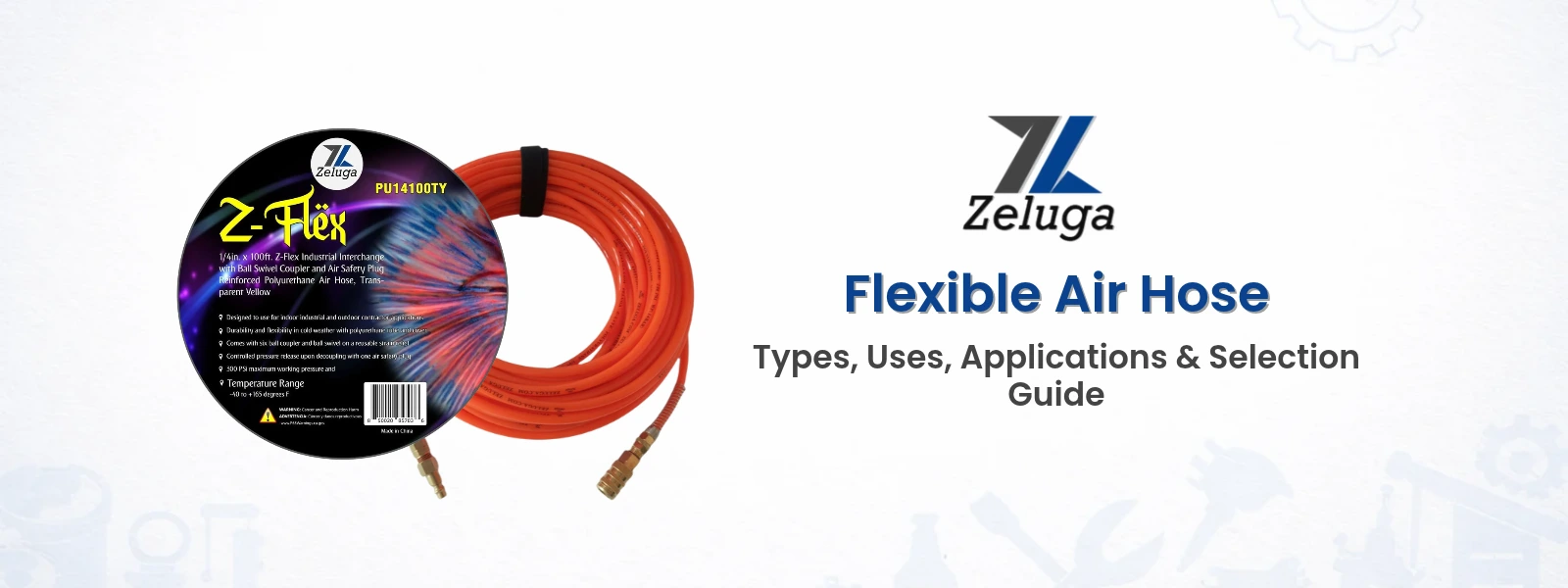
A flexible air hose selection is not just about choosing a particular material and length of the hose. In addition to that, a hose has to comply with the airflow requirements, working pressure, connection features, and the environment where you use your pneumatic tool.
Polyurethane and PVC hoses have different qualities, whereas reinforced and non-reinforced hose designs suit different requirements. By knowing these features, you can make an informed choice of a flexible air hose.
What Is a Flexible Air Hose?
A flexible air hose delivers compressed air from an air compressor or air pipe to pneumatic equipment. This hose ensures that users do not have to place the compressor close to the work area.
Factors such as the hose’s material, inner diameter, length, and pressure rating affect its suitability. Choosing the right hose assists in maintaining airflow and safe operation of the machine.
How Does a Flexible Air Hose Work?
Pressurized air is delivered to the suitable pneumatic tool using the connected hose from an air compressor. Fittings and couplings make the connection between the hose, air supply, and equipment.
The compressed air delivers the energy required by the tool when it is being used. The hose should be able to accommodate the pressure and flow requirements of the application without exceeding its rating.
What Makes an Air Hose Flexible?
Flexibility is determined by the hose material type, wall thickness, and diameter. Polyurethane and PVC hoses can have different behavior when it comes to bending, movement, or temperature changes.
A smaller diameter doesn’t imply more flexibility, and a flexible hose isn’t always appropriate for every pressure level. Select an option based on the balance between the ease of handling, airflow, and durability.
What Are the Different Types of Flexible Air Hoses?
Polyurethane Air Hoses

Polyurethane air hoses tend to be chosen where manageable weight and flexibility are critical factors. However, actual performance varies depending on the specific formulation, wall construction, and usage conditions. Roofing contractors and other users of pneumatic tools might take into account polyurethane hoses where regular movements are required.
- 21-305 – Z-Flex Ball Swivel Coupler & Air Safety Plug Polyurethane Air Hose
- 21-313 – Z-Flex Ball Swivel Coupler & Air Safety Plug Polyurethane Air Hose
- 21-314 – Z-Lite Polyurethane Non-Transparent Air Hose, Extremely Lightweight
Reinforced Polyurethane Air Hoses

Reinforced polyurethane air hoses have added materials in their construction to provide specific structural characteristics. The type and arrangement of reinforcement determine the abilities of the finished hose. Check the diameter, connections, temperature limits, and compatibility with the pneumatic equipment.
PVC Air Hoses
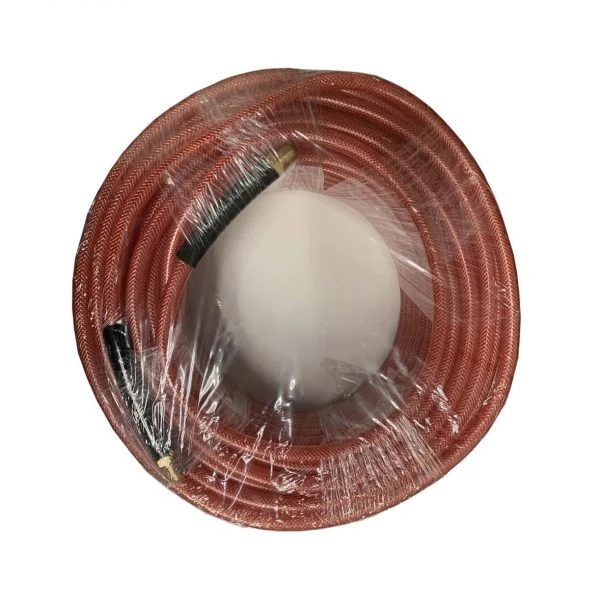
PVC air hose is another option for compatible compressed air applications. The characteristics of PVC air hose, such as flexibility, weight, and environmental durability, depend on the composition and construction of the material.
PVC air hoses in transparent form come in various colors too. Make sure that you check the rated pressure, temperature range, size, and compatibility when selecting PVC for specific use.
Non-Reinforced Air Hoses

Non-reinforced air hoses do not have any extra layers or structures for reinforcement. The appropriateness of their usage will be determined by the material, wall thickness, and maximum pressure levels as stated by the manufacturer.
Do not make the mistake of assuming that non-reinforced air hoses are not appropriate for all industrial applications. It is essential to verify the pressure capacity and compatibility of the non-reinforced hose prior to its use.
- 21-307 – Polyurethane Non-Transparent & Without Wire Reinforced Air Hose Combo
- 21-342 – Z-Lite Polyurethane Non-Transparent & Without Wire Reinforced Air Hose, Orange
What Are Flexible Air Hoses Used For?
Flexible air hoses supply compressed air to compatible pneumatic equipment in professional working environments. Their applications depend on the tool’s requirements and the hose’s specifications.
Roofing, construction, carpentry, and workshop maintenance can involve different demands for hose length, airflow, pressure, and handling. Choosing a hose according to its intended use helps avoid compatibility problems and supports dependable equipment operation.
Air Hoses for Roofing Nailers
Pneumatic roofing nailers make use of compressed air to drive nails into the roof material. This compressed air is supplied through an air hose that is connected to the nailer.
Various factors including hose length, internal diameter, pressure rating and coupler compatibility, affect the setup. Other aspects that roofers have to take into consideration regarding the hose include its routing on the roof.
Air Hoses for Construction and Carpentry Tools
Construction workers and carpenters utilize pneumatic nail guns and other compatible air-powered tools for various purposes. Each tool may have a unique pressure range, airflow, and connection type.
A hose that works for one nailer may not work for another tool. Read the equipment manual and hose specifications before using the tool, particularly in cases where multiple tools are run by a common air compressor.
Air Hoses for Workshops and Maintenance
Air hoses that have flexibility are used by workshops to connect the compressors or air distribution systems to the appropriate pneumatic tools.
There may be a variation in hose lengths and configuration according to the workstations and types of tools being used. The air hose must allow for enough flow of air but not at the expense of high pressure loss.
How to Choose the Right Flexible Air Hose
Check the Required Working Pressure
Working pressure is the pressure that the hose can operate under at its highest limit in ordinary working conditions. The burst pressure is the pressure point at which it fails when subjected to testing. The burst pressure should never be used as a goal during operation.
Select the Correct Hose Diameter and Length
The internal diameter controls the amount of airflow, whereas the length controls the pressure loss. The hose that is too narrow or too long may impede airflow, especially when the tool needs a large volume of air. Before deciding on the configuration, consider the distance between the compressor and your working location.
Compare Hose Materials and Construction
Polyurethane, reinforced polyurethane and PVC should be compared based on your working conditions. Do not depend solely on the material type, but consider flexibility, weight, reinforcement, temperature limits, and pressure rating of each.
It is also possible that two hoses made from the same material can perform differently. Check the specification for each hose and decide which one suits your application.
Check Fittings, Couplings and Connections
Hose connections have to be compatible with the air supply and pneumatic tools. One should check for the fitting type, size, connection standard, and pressure rating of the fittings before buying them. Using a ball swivel coupler can give you better flexibility in connecting the parts depending on the design of the coupler. Fittings should never be forced.
Also Read : Air Hose Fittings Types: Complete Guide & Uses
Consider Weight, Handling and Work Environment
Hose weight and handling become significant if workers have to relocate a lot or use the equipment above their heads. Take into account routing, storage, abrasion exposure, and temperature conditions when selecting your hose.
A lighter hose is more manageable but not necessarily durable or appropriate. Select the construction that works well for your specific work environment and equipment.
Verify Safety and Manufacturer Specifications
Before using the hose, ensure you know its rated pressure and temperature limits, connection compatibility and inspection requirements. Ensure there are no cuts, cracks, leakage, damaged connections, or wear on the hose.
Avoid going beyond the limits and removing the pressurized equipment without proper procedure. Both correct selection and inspection help in safe operation of the hose.
What Are Air Hose Couplers and Safety Plugs?
Couplers and plugs for air hoses are used to join the various parts in the pneumatic system. The design of these accessories determines how connections can be made, secured, and detached.
There are cases when some hoses come with couplers and plugs pre-installed, but other hoses need compatible fittings to be installed separately.
What Does a Ball Swivel Coupler Do?
The ball swivel coupling enables angular movement at the point of connection within its designed range. This will be able to allow for different angles when using your pneumatic tools. However, it does not guarantee that the hose will never tangle or kink. Ensure that the coupling connections, maximum pressure, and angular movement range match with your tool.
What Is an Air Safety Plug?
An air safety plug is a type of pneumatic connector that works in accordance with the particular design of the plug. Certain plugs and couplers are designed with certain properties to facilitate safer connection or disconnection processes.
How to Check Coupler and Hose Compatibility
Look at the connection standard, size, pressure rating, and compatibility with both the air supply and pneumatic tool. Fittings that appear similar do not always mean they will be compatible.
Make sure the hose either has the coupler and plug you need or that you have to buy them separately. In case you are replacing a hose, look at its original connection specifications instead of appearance.
Common Air Hose Selection Mistakes
Choosing a Hose Without Checking Pressure Ratings
The hose should be able to withstand the pressure generated by the pneumatic system within its operational range. Relying upon looks, construction materials, or the cost of a hose alone will disregard this factor.
Consider the working pressure rating and adhere to the manufacturer’s guidelines. It is incorrect to take the bursting pressure into account as the maximum pressure for normal operation.
Ignoring Diameter, Length and Tool Requirements
Either an incorrect diameter or excessive hose length will result in poor airflow and low pressure at the point of use. This could have effects on the performance of the equipment, especially when there is a higher air demand.
Refer to the manufacturer’s specifications regarding the appropriate hose size and airflow. Take into account the total length of the hose from the source of the air to the equipment.
Overlooking Fitting Compatibility
An incorrect fitting can cause problems establishing a good fit or be wrong for use in the pneumatic system. Inspect the connection type, size, and pressure rating of the hose, air supply, and tool. Do not assume that fittings will fit because they appear similar. Make sure to check the specifications before purchasing replacement hoses or building up your pneumatic system.
Using a Hose Outside Its Rated Conditions
Air hose should be operated within the specified pressure and temperature ranges. Any exposure to improper conditions or any kind of damage, abrasion, or degradation of material can impair their functioning and safety.
The hoses should be checked periodically and according to the manufacturer’s instructions. Do not continue operating a damaged hose and replace it if necessary. Do not try to make up for an inappropriate hose by exceeding its limit ratings.
Conclusion
Choosing a flexible air hose starts with understanding your pneumatic tool’s requirements and the conditions in which you work. Material, reinforcement, diameter, length, working pressure, and connection compatibility all influence suitability.
Compare polyurethane and PVC options using verified specifications rather than general assumptions. If you need hoses for roofing, construction, workshops, or bulk supply, review the available product details and confirm compatibility before ordering.
Also Read:
Best Air Hose Manufacturer & Supplier in USA – Zeluga
Air Hose and the Benefits of Using Compressed Air
Frequently Asked Questions About Flexible Air Hoses
1. What Is the Best Material for a Flexible Air Hose?
The best material depends on your equipment and working conditions. Compare polyurethane and PVC based on flexibility, weight, pressure rating, temperature limits, and material compatibility. Always check the specific hose specifications before choosing.
2. Is a Polyurethane Air Hose Better Than a PVC Air Hose?
Neither material is universally better. Polyurethane may suit applications where handling and flexibility matter, while PVC can suit other compatible applications. Compare individual product specifications, working conditions, and equipment requirements before deciding.
3. How Do You Choose the Right Air Hose Size?
Check your pneumatic tool’s recommended internal diameter, required airflow, working pressure, and maximum hose length. Consider the distance from the compressor to the tool because excessive length or an unsuitable diameter can increase pressure loss.
4. Can You Use Any Air Hose with a Roofing Nailer?
No. The hose must meet the nailer’s pressure and airflow requirements and have compatible connections. Check the nailer manufacturer’s recommendations and the hose’s rated specifications before connecting it to the air supply.
5. How Often Should an Air Hose Be Inspected?
Inspect the hose before use and whenever damage, leaks, or abnormal wear are suspected. Follow the manufacturer’s inspection and maintenance guidance. Remove damaged hoses from service and replace them when necessary to maintain safe operation.