
If you are working in a metal, wood, machinery or tool-based industry, then your apron needs to be functional. The apron should be suitable to your working environment and provide protection from any hazard. Leather aprons are often favored due to their durable nature when completing tough tasks in the workshop. However, not all leather aprons are the same. In this blog, let’s dig deep into everything about leather aprons.
What Are the Different Types of Leather Aprons?
Leather aprons are designed according to various working environments, depending on what material you are working with, what tools you are using and how much protection you need.
1. Leather Welding Aprons
Leather welding aprons are designed for use when undertaking welding and metal fabrication work. They are usually made of thick leather to help protect from flying sparks, splatter and short-term heat exposure. Split cowhide is often used for this purpose.
2. Leather Woodworking Aprons
Working with timber, furniture or carpentry tools means that a woodworking apron can be used to protect your clothes from dust, scratches and general wear from your tools. The apron also has useful tool storage space. With multiple pockets, it can hold all of your pencils, measuring tools and small accessories.
3. Leather Blacksmith Aprons
Blacksmithing involves working with hot metal, forging and shaping. You will need an apron suitable for these demanding conditions. A heavy duty leather apron is commonly used due to its durability and protection against sparks and wear in the workshop. It is important that you have good coverage across the front of your body.
4. Leather Mechanic and Workshop Aprons
A leather apron will protect you from getting dirt and grease on your clothes whilst carrying out auto repairs or mechanical work. The pockets are great for when you frequently use small tools and accessories.
5. General-Purpose Leather Work Aprons
General-purpose leather aprons are great for general hands-on tasks, such as DIY, gardening, repairs and crafting. They provide a tough protective cover and lots of easy storage space for your most-used accessories.
What Are Leather Aprons Used For?
A leather apron is designed to be tailored to the task it will need to be used for. There are a number of different types of professional use:
1. Welding and Metal Fabrication
When welding or metalworking, an apron can help protect you from flying sparks and spatter, plus any workshop debris. Thick split cowhide is commonly selected for these applications.
2. Woodworking and Carpentry
An apron will keep your clothes clean of sawdust, scratches and allow you to bend and reach comfortably. If you are using measuring instruments, pencils & small tools throughout the day then pockets become an important consideration.
3. Blacksmithing and Metal Forging
Blacksmiths perform a variety of tasks such as forging, shaping and metalwork using leather aprons. They protect you from sparking and everyday work. They also have long fronts which are useful for working at a forge.
4. Automotive Repair and Mechanical Work
Leather aprons are useful in garages and repair shops to protect your clothes and provide a place to store small items. Choose an apron that will remain secure but not hinder your movements when moving around your workstation frequently.
5. Gardening and General Workshop Activities
A leather apron is great for gardening or general workshop use. It will protect your work area from grime and scratches plus has pockets to keep small tools, pencils and accessories.
How to Choose the Right Leather Apron
Consider where and how you’ll be using your leather apron. The material, thickness, cover and build should all be suitable for the task at hand.
1. Consider the Type of Work You Perform
Consider the main usage. Different applications such as welding, woodworking, blacksmithing and mechanical repairs will require different levels of protection. Don’t choose a heavy-duty design just because it is labelled heavy-duty.
2. Check the Leather Material and Thickness
Cowhide is commonly used in heavy-duty work aprons. Split cowhide is made from the lower layers of the hide after separation. Check the actual leather thickness in millimeters.
3. Look for Heat and Flame-Resistant Properties
If you perform welding or metal fabrication, ensure the leather and apron design is appropriate for your exposure conditions. Make sure there is clear information on the materials and any relevant safety documents.
4. Examine the Stitching and Construction
Ensure that the seams, strap attachments and pockets are well sewn. Some welding aprons use Kevlar threading due to its heat-resistant properties. The apron should be well constructed with good stitching and neat edging.
5. Choose the Right Length and Coverage
The length of the apron impacts the coverage and mobility. Waist aprons offer limited front coverage while bib-style aprons offer full upper and lower body coverage. Longer aprons can cover up to the knee.
Split Cowhide vs Other Leather Materials: What’s the Difference?
Split cowhide is produced from the lower sections of the cowhide during the leather manufacturing process. It usually has a fibrous texture rather than the natural grain surface found on full-grain leather. It has different properties depending on the thickness, processing and finishing. Split leather is commonly used for heavy-duty welding and industrial aprons.
Full-grain leather retains the natural grain surface of the hide. It is popular due to its high level of aesthetics and durability. Split cowhide has a different surface structure and is often chosen for practical workwear. Both materials can be used for different tasks. Choose which one you want based on the protection needed, build and use.
Split cowhide is a very common choice for welders and intensive workshop situations. It will depend on how thick, good quality and protective your apron needs to be. Look at the stitching, coverage and material. Choose according to the hazards you encounter rather than leather type alone.
Leather Apron vs Canvas Apron: Which One Should You Choose?
Leather and canvas aprons are designed for different working conditions. Choose based on the tools, materials and conditions you will be working with.
| Comparison | Leather apron | Canvas apron |
| Material | Animal hide | Woven fabric |
| Durability | Suitable for demanding wear | Depends on fabric weight and construction |
| Heat exposure | Some designs offer heat and spark resistance | Standard canvas is not welding protection |
| Weight | Generally heavier | Generally lighter |
| Flexibility | Depends on leather thickness | Often more flexible |
| Maintenance | Requires leather-specific care | Often easier to clean |
| Applications | Welding and selected workshop tasks | Woodworking, crafts and general workshop use |
How to Maintain and Care for a Leather Apron
To keep your leather in good condition, it is important that you clean and maintain your apron correctly based on the type of finish on your leather and type of dirt.
Cleaning
Use a gentle brush or cloth to remove any loose dust and dirt. Clean any stains according to the manufacturer’s guidelines. Do not over-soak leather and avoid harsh detergents.
Storage
This should be stored in a clean, dry, well-ventilated place out of direct sunlight, excess moisture and heat. Try not to fold tightly as this may cause permanent creasing.
Inspection and Stitching for Damage
Before using the apron, check the leather and seams for any deep cracks, burning, holes, loose stitching and loose attachments. Check areas likely to receive frequent sparking and rubbing.
Replacing
If your apron has been overly damaged, is too fragile or has holes you will need to replace it. If there are torn seams, broken straps or major burns to the apron.
Why Choose a Heavy-Duty Leather Welding and Workshop Apron?
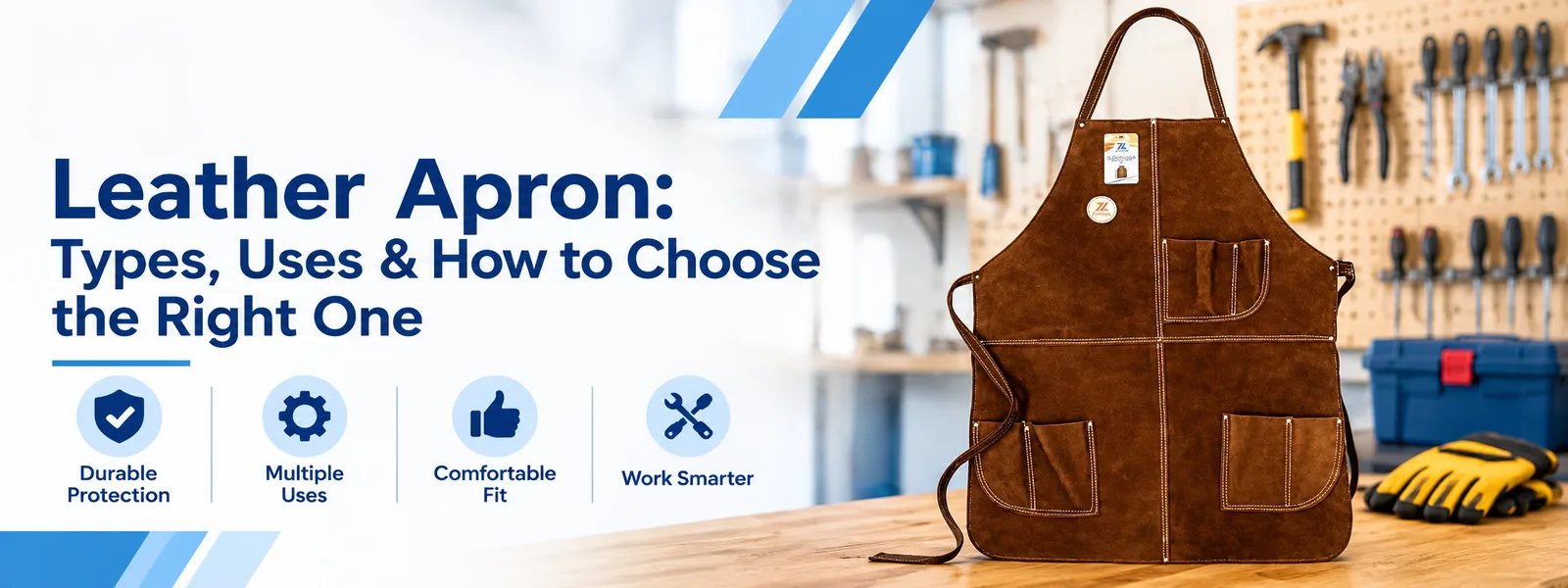
If your job requires welding, metalwork or high-impact workshop activity, then you need a quality apron. Zeluga heavy-duty leather welding and workshop apron combines thick split cowhide with practical storage and extended front coverage.
Its main features include:
- Thick Split Cowhide Leather: Provides a durable construction for demanding workshop applications.
- Heat and Flame-Resistant Material: Designed to help protect against heat, flames and welding spatter during suitable tasks.
- US Kevlar Thread Stitching: Uses strong, heat-resistant thread for seam construction.
- Eight Dedicated Pockets: Includes six tool and accessory pockets, one pencil pocket and one cell phone pocket.
- Extended Knee-Length Coverage: Provides additional front coverage while working.
- Leather Straps: Provides a leather strap construction for securing the apron.
Looking for a Heavy-Duty Leather Apron Manufacturer in the USA?
Choose Zeluga for heavy-duty leather welding and workshop aprons designed for demanding work environments. As a US-based manufacturer and supplier, we offer thick split cowhide leather construction, heat and flame-resistant material, and strong US Kevlar thread stitching. Each apron features eight dedicated pockets, durable leather straps and extra-long knee-length coverage. Suitable for welding, metalworking, woodworking, mechanics and other workshop applications.
Contact Zeluga for wholesale enquiries, bulk orders and leather apron supply requirements.
Conclusion
When choosing a leather apron it is important to consider working conditions. Along with what type of leather is used, how thick it is, stitching, how much coverage it provides and pocket layout. For welding and demanding workshop work, a thick split cowhide with appropriate heat-resistant stitching will provide a durable and protective apron.
FAQs About Leather Aprons
How should you measure yourself for a leather apron?
Measure your chest and desired apron length. Adjust straps so that you feel secure and comfortable.
Are leather aprons suitable for daily professional use?
Yes, they can. A well made leather apron can be used regularly if properly looked after and suited to your working conditions.
Can leather aprons withstand repeated contact with workshop surfaces?
Whilst leather is resistant to abrasion, if constantly rubbed it will cause some damage.
Do leather aprons require special storage conditions?
Store away from direct sunlight. In a cool, dry and well ventilated area.
Can leather aprons become stiff over time?
Yes. If too much heat and moisture is applied and they are not stored correctly they can become stiff.
Are leather aprons suitable for both men and women?
Yes. Just measure your size, the size of the apron and adjust the straps accordingly.
What makes a leather apron comfortable during long working hours?
This will depend on the weight, correct sizing, even strap distribution, good coverage and pocket placement.
Can you customize leather aprons for specific workshop requirements?
It will depend on what the manufacturer offers. You should find out what sizes, pockets, materials and design options are available. Contact the Zeluga team for bulk custom leather apron requirements.