
What is a Carabiner?
A carabiner is a metal loop that comes with a spring loaded gate. It has the purpose of opening and closing to connect different parts of a system. It is commonly used in climbing setups where ropes harnesses and anchors need a really secure link. You must know most climbing carabiners are made from strong aluminum alloys and are tested for load strength. In simple terms it is a small but very critical component that keeps connections stable under pressure.
Why Carabiners Matter in Climbing and Safety
Load Bearing Connection
You will notice that every climbing setup basically depends on how load moves through the system. Even a carabiner takes both dynamic and static force. It connects rope harness and anchor. If the wrong type is used the load is not distributed properly and risk increases quickly.
Gate Security
Now the gate looks simple but you should know it controls everything. It decides when the system stays closed. If it opens even slightly under movement or rope pressure the connection weakens. Locking mechanisms are designed to prevent this and keep the system stable.
System Integrity
If you look closely a climbing system is just only as strong as its weakest point. The carabiner sits at the center of this connection. A mismatch in design shape or strength can disturb the entire setup and affect safety under load.
Ease of Handling
Even in real situations you are not always in a perfect position. You may be using one hand or wearing some gloves. A well designed carabiner should open and close smoothly without effort so that handling does not interfere with control or safety.
Error Prevention
Generally failure happens because of small human mistakes. Not locking the gate is common. This is where auto locking systems make a difference. They reduce dependency on manual action and improve reliability during actual use.
Main Types of Carabiners
Non-Locking Carabiners
Often you will see these used where speed matters more than security. As they are simple and quick to clip. Common in gear setup and quickdraws. But they can open under movement or rope contact so they are not suitable for critical load points.
Locking Carabiners
Now when safety becomes the priority locking carabiners are widely used. They add a mechanism that secures the gate. These are preferred in anchors and belaying where even a small opening can create risk. They are designed for controlled and secure connections.
Screwgate Carabiners
So in this type you need to manually tighten the sleeve to lock the gate. It is basically a proven design and works well when used correctly. But it depends fully on the user remembering to lock it which can be missed in fast or stressful situations.
Twist-Lock Auto-Locking Carabiners
Here the mechanism becomes even more advanced. You push and twist to open and it locks automatically once released. This allows one hand use and removes the unnecessary step of manual locking. In practice this reduces error and improves speed in real climbing or rescue conditions.
Triple-Lock Carabiners
These are built for maximum security. Opening even requires three separate actions which makes accidental opening very unlikely. They are commonly used in industrial and rescue environments. The trade off is that they take more time to operate compared to simpler systems.
What is an Auto-Locking Carabiner?
Now when people hear auto locking carabiner they usually think it is just another variation but it actually solves a very real problem. It locks on its own the moment the gate closes so there is no extra step required. This removes the common mistake of forgetting to secure it. In practical use twist lock designs allow you to open and clip with one hand which matters a lot during climbing or rigging. That is why designs like the Auto Locking Oval Carabiner Blue are preferred where safety and speed both matter together.
Different Carabiner Shapes and Their Uses
Oval Carabiners
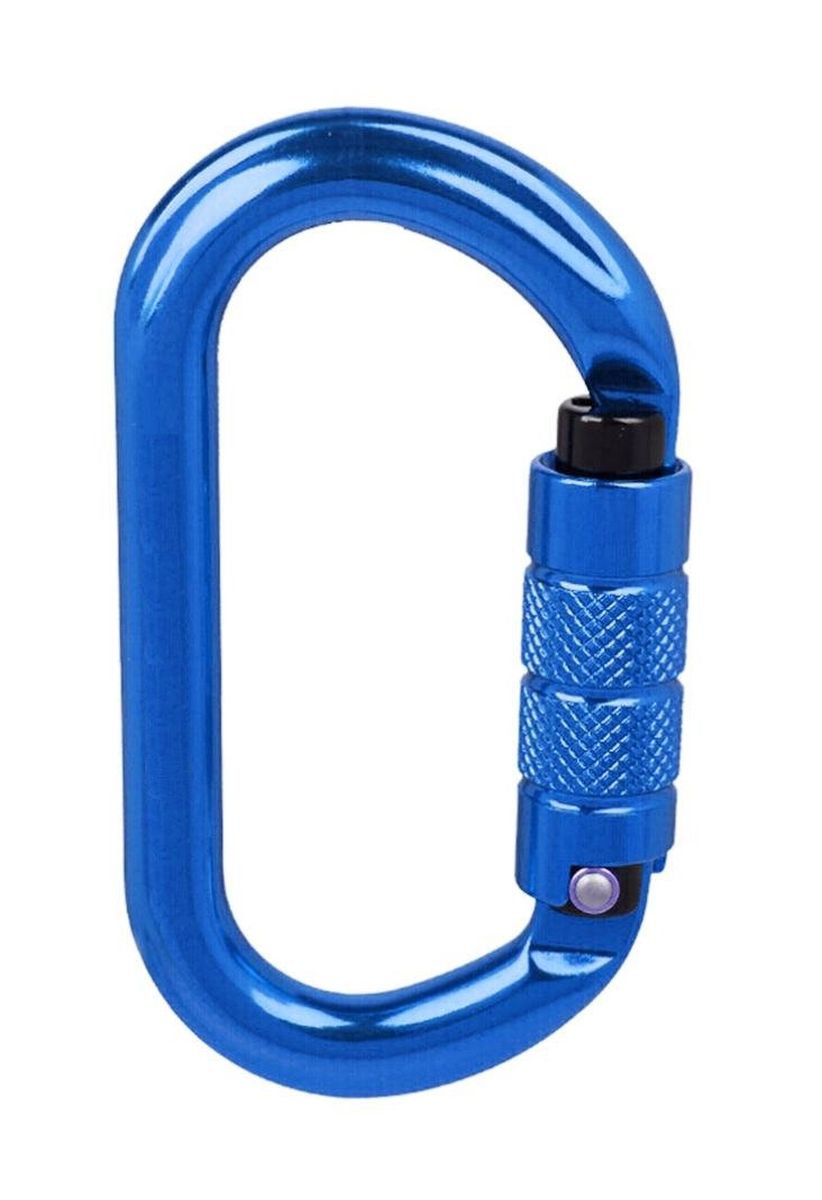
So when we talk about oval carabiners the first thing to understand is balance. The shape is even on both sides so the load stays centered instead of shifting. This makes them very stable in systems like pulleys anchors and rigging setups. Many professionals still use them in controlled environments because the behavior is predictable and easy to manage especially for beginners.
D Shape Carabiners
Now D shape carabiners work a little differently. The structure naturally pushes the load toward the spine which is the strongest part. Because of this they offer better strength efficiency without increasing weight. In climbing systems where performance matters this design is often preferred since it handles load direction more effectively under pressure.
HMS or Pear Shape Carabiners
If you look at HMS or pear shape carabiners you will notice they are wider at the top. This is not just design it is functional. The larger space allows rope movement especially during belaying or knot handling.
Understanding Carabiner Strength
Major Axis Strength
Major axis is the direction where the carabiner is strongest. When you see a rating like 25KN it means the load it can handle along its spine. In real climbing scenarios this is the primary load path so this number matters the most.
Minor Axis Strength
Now on the other side you have the minor axis which runs across the gate. This is always weaker compared to the spine. In actual use you should avoid loading in this direction because it reduces the safety margin significantly. Proper alignment is key here.
Open Gate Strength
Then comes open gate strength which many people ignore. When the gate is not closed the strength drops a lot. Even a strong carabiner becomes vulnerable in this state. That is why locking systems are not optional in critical use they are necessary.
Material Quality
Talking about build quality most reliable carabiners are made from 7075 aircraft grade aluminum. It gives a strong structure without adding extra weight. For climbing gear this balance is important because you need both durability and portability in real conditions.
Testing Standards
Finally strength ratings come from controlled lab testing. But real world use is never perfectly controlled. Small variations can happen depending on load direction and usage. This is why professionals always choose tested and certified gear instead of relying on unverified products.
How to Choose the Right Carabiner
Based on Use
So when you look at where you will use it the choice becomes clear. For climbing and any load bearing setup you should always go with a locking carabiner. It gives controlled connection and better reliability. For lighter tasks like holding gear or organizing equipment a non locking option works fine. The use case always defines the safety level you need.
Based on Safety Level
Now if safety is your main concern then your choice should reflect that. Beginners usually benefit from auto locking systems because they remove the chance of forgetting to lock. It adds an extra layer of protection without effort. More experienced users may still use screwgate designs but they must stay disciplined and check locking every time.
Based on Convenience
In real conditions handling matters more than people expect. You might be using gloves or working quickly. So a design that allows one hand operation feels more practical. Smooth gate action and a lightweight build also reduce fatigue. Over time these small factors improve both efficiency and control in outdoor use.
Common Mistakes to Avoid Choosing Carabiner
Using Non Locking for Climbing
Many people assume any carabiner will work for climbing but that is not correct. Non locking types are not built for critical safety points. They can open under movement or pressure. Using them in load bearing systems increases the chance of failure and should be avoided completely.
Ignoring Strength Ratings
It is easy to overlook numbers when buying but strength ratings matter a lot. KN values show how much load a carabiner can handle. If you ignore this you may end up with gear that is not suitable for your activity. Always match the rating with the expected load.
Choosing Cheap Unverified Products
Sometimes price even becomes the main factor but that can lead to risk. You shoud know low quality materials and lack of proper testing reduce reliability. In safety gear this is not acceptable. Choosing tested and verified products ensures consistent performance when it actually matters.
Improper Loading Direction
Not many people pay attention to how the carabiner is loaded. But direction plays a key role in strength. Loading across the minor axis reduces its capacity. The design is strongest along the spine so proper alignment should always be maintained.
Forgetting to Lock
This is one of the most common mistakes in real use. Manual locking systems depend fully on the user. In fast situations it is easy to forget. An unlocked gate under load can lead to serious failure. This is why many users now prefer auto locking options.
Application of Carabiners
Rock Climbing
In climbing setups the carabiner becomes a core connection point. It links ropes harnesses and anchors into one system. Every load passes through it. Because of this the strength and locking mechanism directly affect overall safety during climbs.
Camping and Hiking
Outside of climbing carabiners are widely used for carrying and organizing gear. While the load may be lighter the need for durability and ease of use still remains important in outdoor conditions.
Rappelling
During descent control the carabiner works with ropes and devices to manage movement. It must handle continuous load and friction. A secure locking mechanism is essential here because any failure can affect control during the descent.
Rescue Operations
In rescue scenarios reliability is not optional. Carabiners are used in systems where people depend on them directly. Strength ratings and locking systems must perform without compromise. This makes high quality designs critical in such environments.
Industrial Use
In industrial safety systems carabiners are used in harness setups and fall protection. Workers rely on them during height operations.
Why Professionals Trust Zeluga Carabiner
Automatic Locking Safety
So the first thing professionals look for is reliability. With an auto locking system the gate shuts and locks on its own. This reduces chances of human error during setup. In real situations this matters more than anything else. You do not have to double check again and again.
One Hand Operation
Now in actual use conditions you rarely have both hands free. The twist lock design allows smooth opening with one hand. This makes clipping faster and more controlled. Especially useful during climbing or rigging where movement and timing both matter.
High Strength Rating
What really builds trust is strength performance. A rating up to 25KN on the major axis means it can handle serious load. This is not just a number. It reflects tested capacity under force. That is why it is used in climbing and rescue setups.
Lightweight Construction
At the same time weight also plays a role. Using 7075 aluminum keeps the carabiner strong yet light. This balance is important for long duration use. You can carry multiple units without adding unnecessary load to your gear.
Versatile Use
In practice users do not want single use gear. This type of carabiner works across climbing hiking rappelling and even general outdoor setups. That flexibility makes it practical for professionals who handle different environments.
Looking for Carabiner Manufacturer and Supplier in USA?
Zeluga supplies auto locking carabiners designed for real use conditions. You can alos connect with the team to discuss wholesale requirements and supply options based on your needs.
Conclusion
A first carabiner may look like a simple tool but in real systems it carries very responsibility. Understanding its type strength and correct use helps you avoid many risks. If safety and ease of handling are priorities then auto locking designs make more sense. For reliable supply and consistent quality you can get in touch with Zeluga.
Read More:
Top Quality Climbing Rope Manufacturer & Distributor in USA – Zeluga
Top 6 Benefits of Rope Climbing
FAQs
Can all carabiners be used for climbing?
No only certified load bearing carabiners should be used for climbing systems
What does 25KN mean?
It shows the maximum load capacity along the major axis under tested conditions
Are aluminum carabiners strong enough?
Yes aircraft grade aluminum provides high strength with reduced weight
What is the safest type of carabiner?
Locking types especially auto locking are considered safer for critical use
Do carabiners wear out?
Yes over time wear and impact can affect performance so inspection is needed
Can I use a carabiner for hammocks?
Yes but only if the load rating supports body weight safely
What is gate flutter?
It is rapid gate movement under vibration which can reduce safety
How often should I replace a carabiner?
Replace it if you see damage deformation or after heavy load impact
Are bigger carabiners stronger?
Not always strength depends on design and material not just size
Why choose auto locking over screwgate?
Because it removes the risk of forgetting to lock and improves safety in active use