

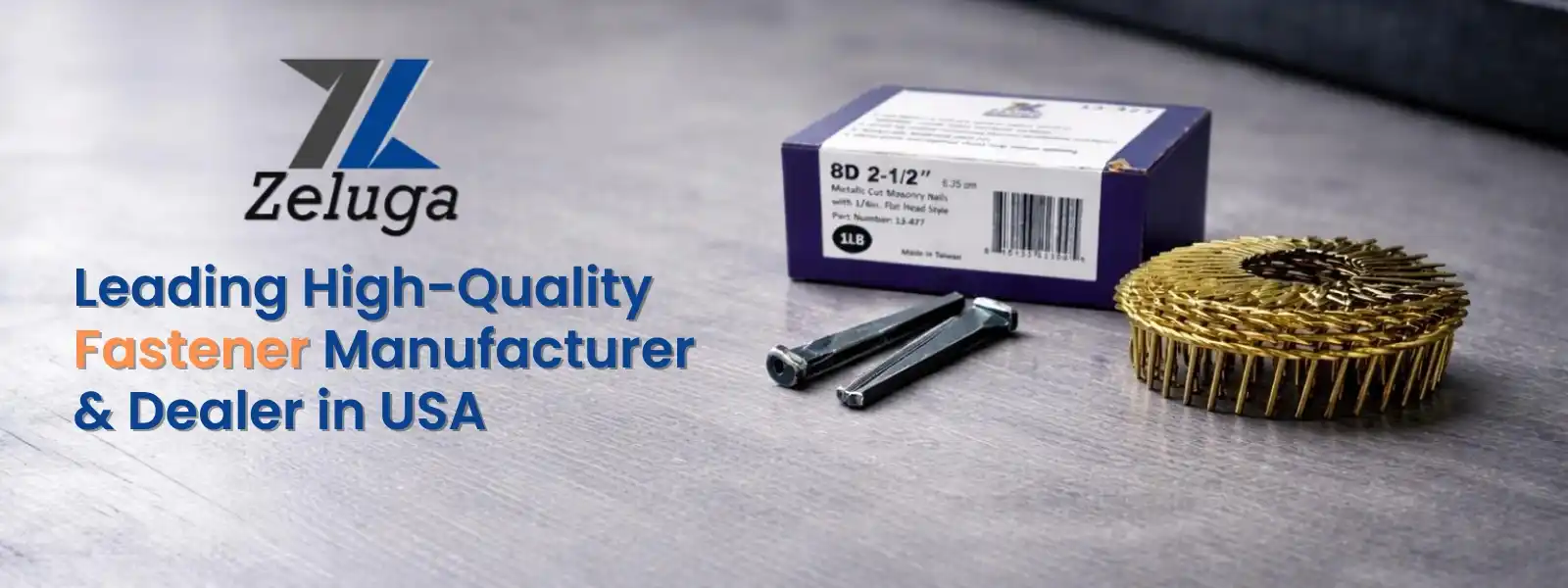
Behind every stable structure is a fastener performing exactly as intended. Strength, corrosion resistance, and manufacturing precision are not optional; they are essential. Even minor inconsistencies can impact safety and efficiency.
What is an Industrial Fastener?
An industrial fastener is a mechanical component used to join materials securely. It creates load transfer between parts. It resists tension, shear, vibration, and environmental exposure. Fasteners are essential in framing, roofing, masonry, manufacturing, packaging, and structural assemblies.
Unlike consumer hardware, industrial fasteners are designed for:
- Performance under stress – sustained loads, dynamic forces, repeated impact
- Material compatibility – wood, steel, concrete, composites
- Durability requirements – corrosion resistance, coating integrity
A fastener is not just a connector. It is a structural element.
Industrial Fasteners: Function, Performance & Application
Load Transfer Mechanism
Fasteners distribute forces between joined materials. Proper shank design, head geometry, and embedment depth determine how tensile strength and shear strength are handled. Incorrect selection can create stress concentration, joint loosening, or substrate damage.
Holding Power & Withdrawal Resistance
Holding performance depends on shank type, surface treatment, and material density. Smooth shank, ring shank, or screw shank designs behave differently. Vinyl coated nails improve grip through friction and adhesive-like bonding during driving.
Environmental Exposure Behaviour
Fasteners operate in varied conditions. Moisture, salt air, chemicals, and temperature cycles influence corrosion resistance. Electrogalvanized coatings provide moderate protection for interior or controlled exposure environments.
Tool Compatibility & Driving Efficiency
Fasteners must match pneumatic nailers, framing nailers, staplers, and powder actuated tools. Collation angle, strip format, wire gauge, and head style directly affect feed reliability and driving accuracy.
Application-Specific Engineering
Roofing, framing, masonry, and stapling require different performance profiles. Roofing nails prioritise head holding and corrosion behaviour. Framing nails focus on penetration strength. Masonry nails demand hardness and impact resistance.
Why Fastener Quality Matters in Professional & Structural Use
Structural Integrity Protection
Low-grade fasteners may bend, shear, or fracture. This weakens joints. Structural grade fasteners ensure predictable load-bearing reliability and safety margins.
Corrosion Prevention & Longevity
Poor coatings lead to oxidation, staining, and joint degradation. Proper protective coatings extend service life and maintain appearance.
Installation Efficiency & Consistency
Precision-manufactured fasteners reduce jamming, misfires, and driving defects. This improves job-site productivity.
Safety & Compliance Assurance
Certified fasteners align with ASTM standards and ISO standards. This supports inspection approval and engineering validation.
Cost Control Over Lifecycle
Cheap fasteners often increase rework, maintenance, and failure risk. Quality fasteners lower long-term operational cost.
Key Factors That Define a High-Quality Fastener
Material Composition & Metallurgy
Fastener performance begins with steel quality. Carbon content, heat treatment, and hardness control tensile strength and ductility. Improper metallurgy causes brittleness or deformation under load.
Protective Coatings & Surface Treatments
Electrogalvanized and vinyl-coated finishes protect against corrosion. Coating adhesion and thickness consistency are critical for durability and environmental resistance.
Precision Manufacturing & Dimensional Accuracy
Uniform shank diameter, collation stability, and head formation ensure feed reliability and driving precision. Tolerance deviations cause tool malfunction.
Tensile Strength & Shear Performance
Fasteners must resist axial pull and lateral forces. Strength ratings must align with structural demands and substrate properties.
Compliance & Industrial Standards
Manufacturing aligned with ASTM, DIN, and ISO standards ensures predictable mechanical behaviour and buyer confidence.
Choosing the Right Fastener for Your Application
Match Fastener to Substrate
Wood, engineered lumber, steel, and concrete require different hardness and penetration characteristics. Masonry nails need higher hardness than framing nails.
Consider Environmental Conditions
Exterior and humid environments demand corrosion-resistant coatings. Electrogalvanized fasteners suit controlled exposure applications.
Verify Tool Compatibility
Check collation angle, gauge, strip format, and head style. Tool mismatch leads to jamming and inefficiency.
Select Proper Shank Design
Smooth shank, ring shank, and coated designs provide different holding power. Choose based on withdrawal resistance needs.
Evaluate Load Requirements
Structural framing and load-bearing joints require fasteners with verified tensile and shear strength.
Zeluga Reliable Fastener Manufacturerand Supplier in US
Zeluga fasteners are engineered for professional applications where consistency matters. Manufacturing focuses on dimensional accuracy, coating integrity, and batch uniformity. Products are designed for pneumatic tools, structural assemblies, and bulk procurement environments.
Key advantages:
- Controlled quality production
- Reliable coating performance
- Bulk supply capability
Zeluga High Quality Fastener Product Range
Framing Nails
Designed for structural framing and heavy-duty wood connections. Optimized for penetration, holding power, and smooth driving performance in pneumatic framing nailers.
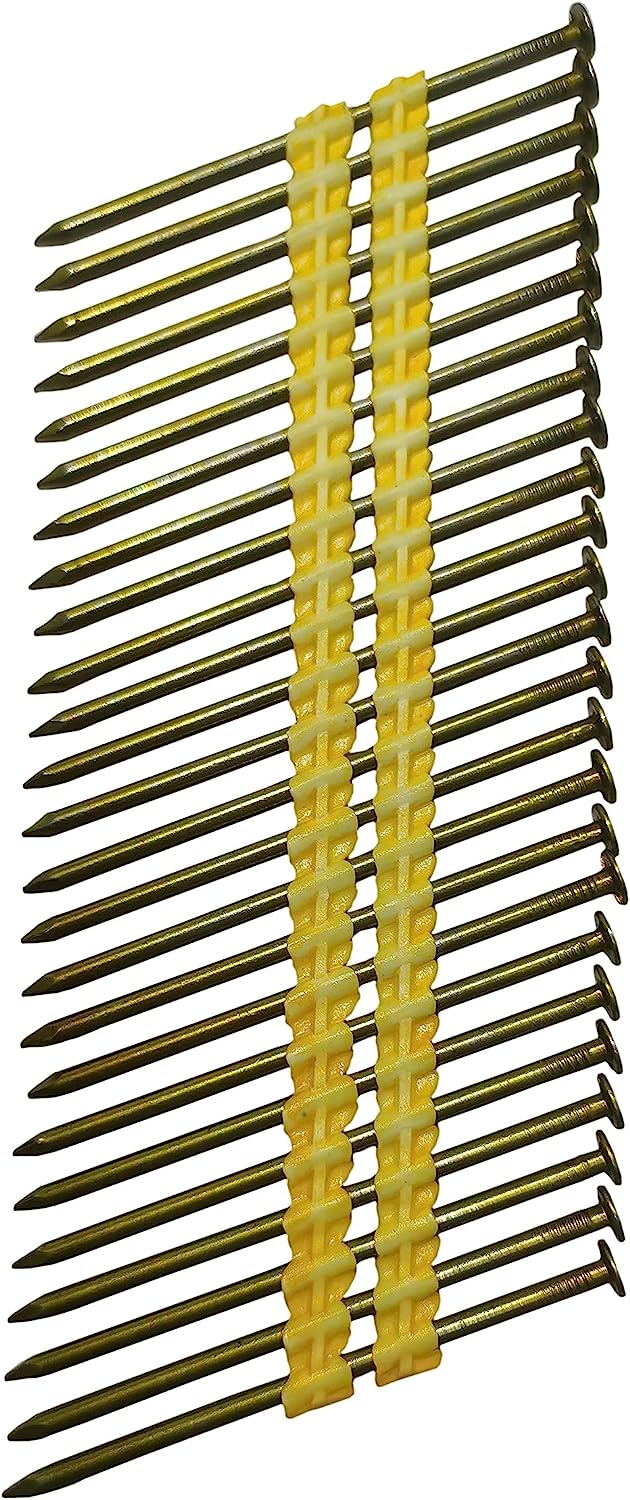
- 13-254 21 Degree Round Head Plastic Collated Vinyl Coated Framing Nail – 4,000/Box
- 13-286 21 Degree Plastic Collated Vinyl Coated Round Head Framing Nail – 4,000/Box
- 13-533 30 Degree 3” x .120” Framing Nails, Smooth Shank, Clipped-Head, Paper Tape – 2,500/Box
Coil Roofing Nails
Engineered for roofing systems requiring head retention and corrosion resistance. Electrogalvanized finish supports durability in controlled exposure conditions.
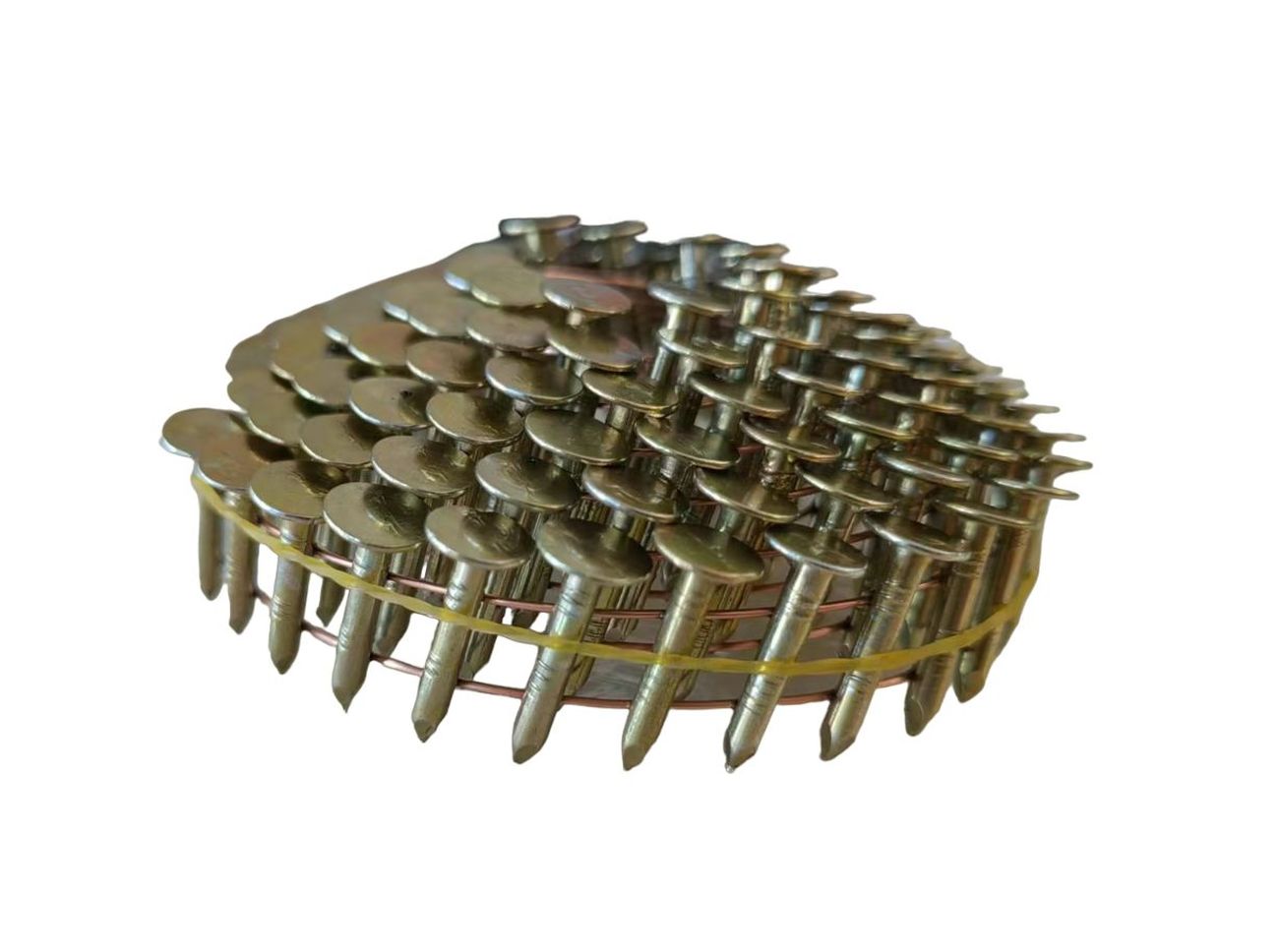
- 13-362 15 Degree Electrogalvanized Smooth Shank Coil Roofing Nail – 7,200/Box
- 13-364 15 Degree Electrogalvanized Smooth Shank Coil Roofing Nail – 7,200/Box
Industrial Staples
Suitable for sheathing, underlayment, insulation, and packaging applications. Precision-formed crowns ensure proper material holding and reduced tear-through.
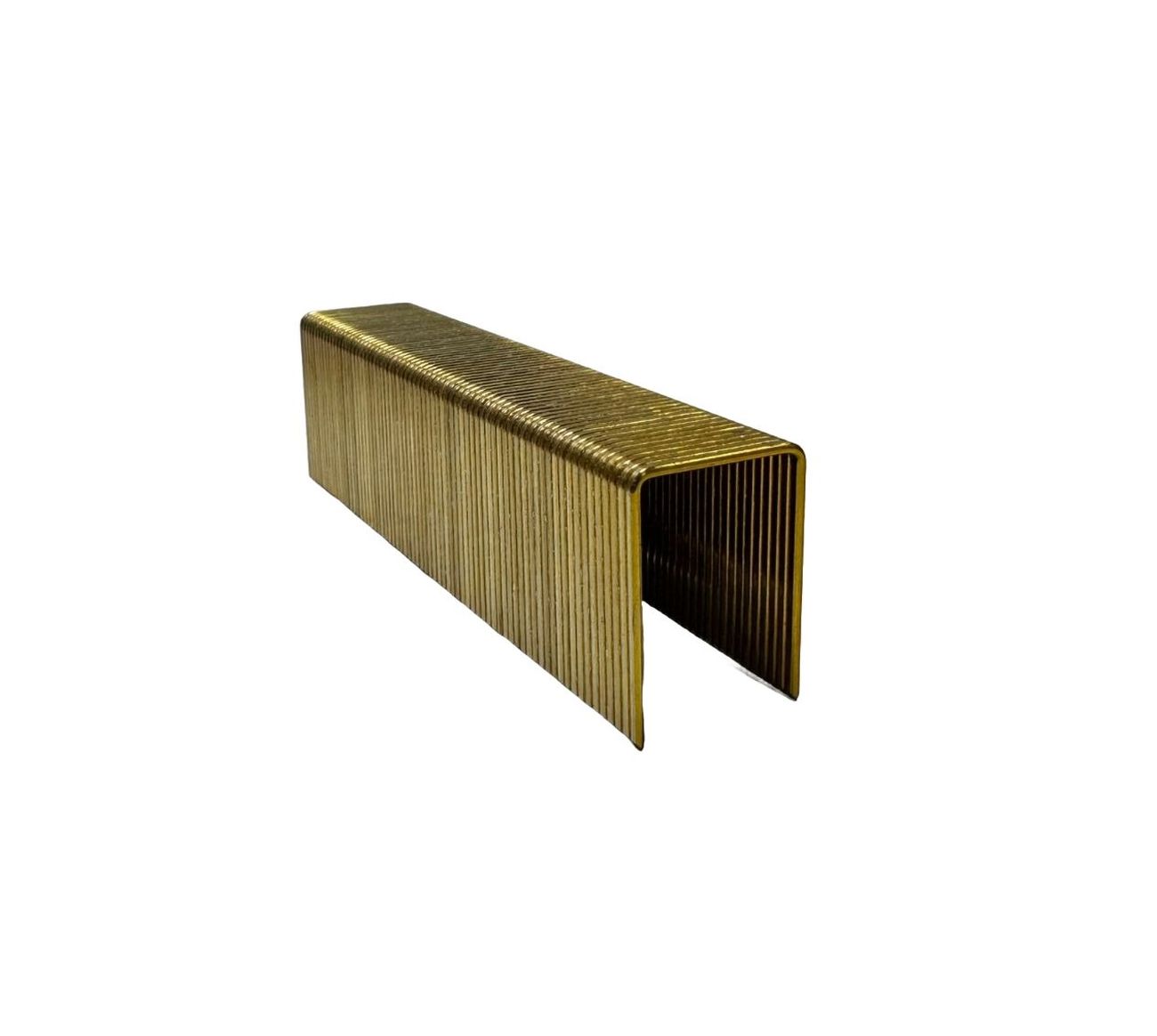
- 13-419 16 Gauge Electrogalvanized N-Style Medium Crown Staples – 10,000/Box
- 13-420 16 Gauge Electrogalvanized GWS-Style Wide Crown Staples – 10,000/Box
Masonry Nails
Manufactured for concrete and brick penetration. Hardened design improves impact resistance and reduces bending.
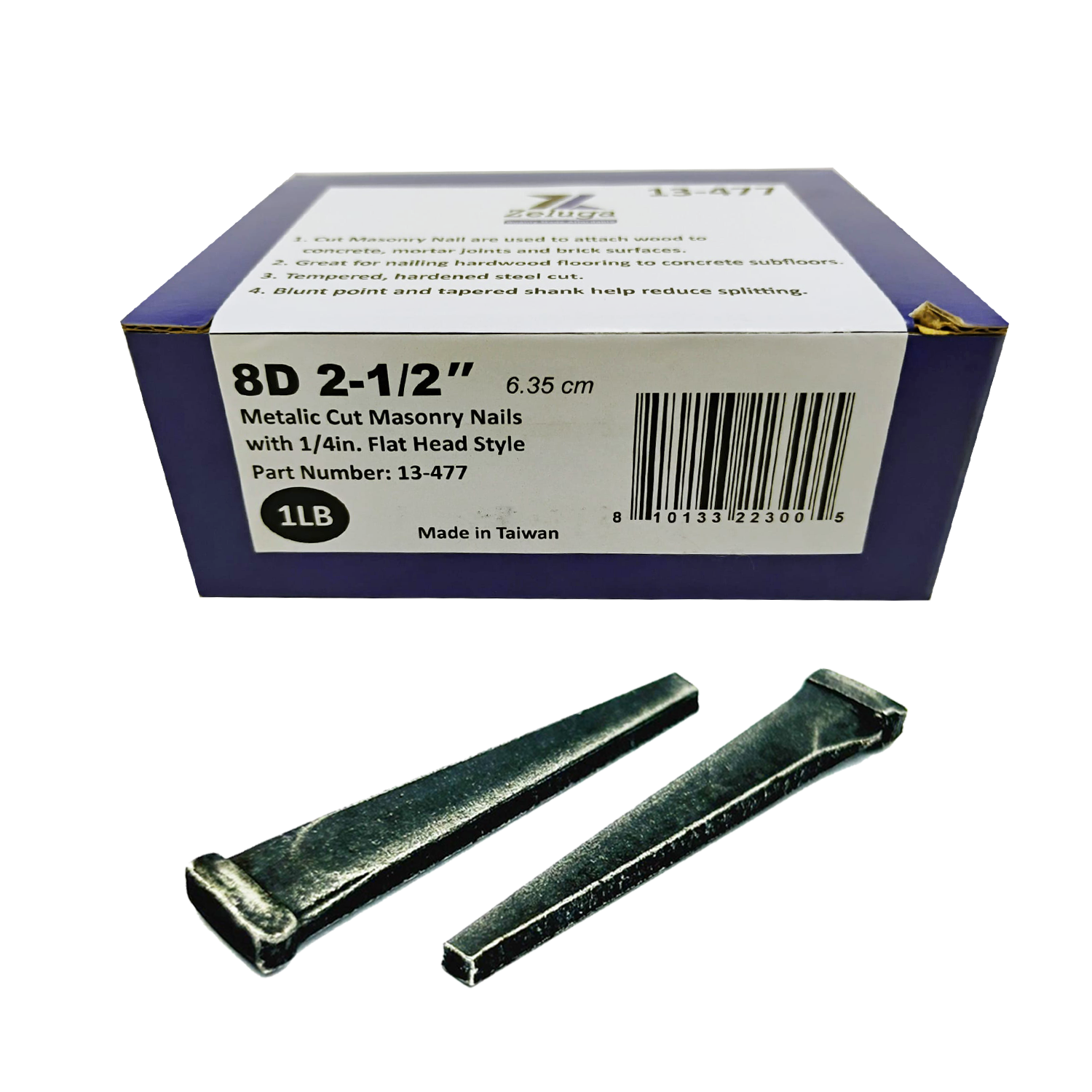
- 13-477 2.5in. – 8d Metallic Cut Masonry Nails – 1LB
- 13-478 2.5in. – 8d Metallic Cut Masonry Nails – 5LBS
- 13-479 2.5in. – 8d Metallic Cut Masonry Nails – 50LBS
Powder Actuated Fasteners
High-strength drive pins designed for steel and concrete anchoring using powder actuated tools.

Why Zeluga Fasteners Stands Out in Industry?
- Consistent manufacturing quality across batches
- Engineered coatings for corrosion resistance
- Precision collation for tool compatibility
- Designed for professional workloads
- Reliable bulk supply & distributor support
Common Fastener Selection Mistakes (And How to Avoid Them)
Ignoring Environmental Exposure
Using non-coated fasteners in humid or exterior environments accelerates corrosion. Always match coating type to service conditions.
Incorrect Tool Compatibility
Wrong collation angle or gauge causes jamming. Verify tool-fastener matching before procurement.
Overlooking Load Requirements
Light-duty fasteners fail under structural stress. Confirm tensile strength and shear strength ratings.
Wrong Shank Design Choice
Smooth shank may lack withdrawal resistance where higher grip is needed. Select design based on holding performance.
Focusing Only on Price
Low-cost fasteners increase failure risk and maintenance costs. Evaluate lifecycle value.
Looking for Best Fasteners Manufacturer and Supplier in USA
Choosing the right fastener partner is critical for quality, consistency, and supply reliability. Zeluga delivers precision-manufactured fasteners engineered for professional workloads, structural performance, and predictable bulk availability.
From framing nails to roofing nails, staples, masonry nails, and powder-actuated fasteners, every batch is built for dimensional accuracy and coating durability.
If your business demands dependable inventory and performance you can trust, Zeluga is ready to support your procurement needs.
Enquire now for bulk purchase.
Conclusion
Fasteners are small components with major responsibilities. Quality, material science, coating, and dimensional precision directly affect structural safety and durability. Choosing correctly reduces failures, improves efficiency, and protects long-term costs. Zeluga fasteners are built around these principles—consistency, reliability, and professional-grade performance.
Frequently Asked Questions
Q1: Do Zeluga fasteners support bulk orders?
Yes. Designed for wholesalers, distributors, and high-volume procurement.
Q2: Are coatings suitable for corrosion resistance?
Electrogalvanized and vinyl-coated options provide protection for controlled exposure environments.
Q3: Can Zeluga fasteners be used with pneumatic tools?
Yes. Products are engineered for framing nailers, roofing nailers, staplers, and powder-actuated systems.
Q4: How is quality consistency maintained?
Through controlled production standards and dimensional accuracy checks.
Q5: Which industries commonly source Zeluga fasteners?
Construction, roofing, framing, masonry, packaging, and industrial manufacturing.