

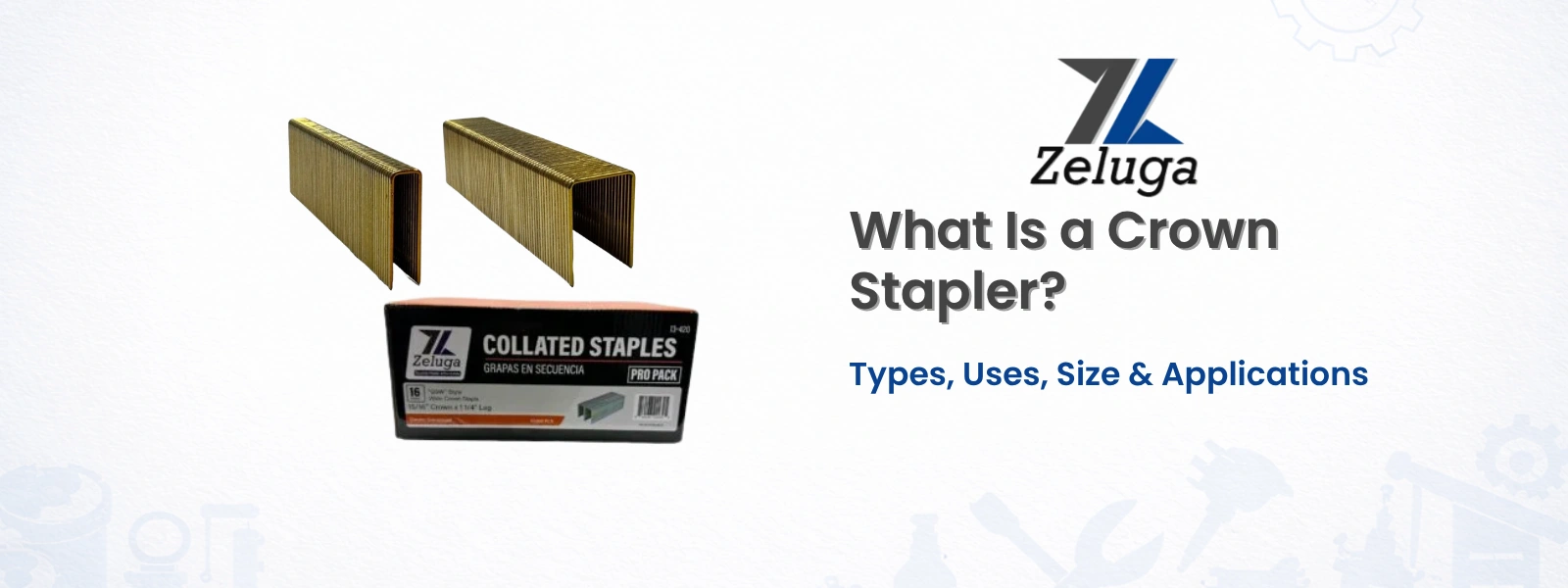
Crown staples are one of the most reliable fastening tools for jobs that need speed, strong holding power and consistent results. However, choosing the right crown stapler is only part of the process. You also need the correct crown staples.
In this guide, you will learn how crown staplers work, the different types available, staple sizes and how to choose the right staples for your application.
What Is a Crown Stapler?
A crown stapler is a fastening tool designed to drive heavy-duty staples into materials like wood, plywood sheathing, flooring, fencing and furniture components. Unlike ordinary staplers, it uses construction-grade staples that provide greater holding power and faster installation for demanding projects.
Types of Crown Staplers
Different crown staplers are designed for different fastening requirements. The correct choice depends on the material application and the type of crown staple required.
Narrow Crown Staplers
Narrow crown staplers are commonly used where appearance matters as much as holding strength.
Finish Work
The smaller crown leaves a cleaner appearance while still providing more holding power than many finish nails for light fastening applications.
Cabinets and Trim
Cabinet backs, trim panels, mouldings, and decorative wood components often benefit from narrow crown staples because they provide secure fastening without creating an oversized visible fastening point.
Furniture Assembly
Narrow crown staplers are widely used when assembling lightweight furniture components where a neat finish and dependable holding strength are both important.
Medium Crown Staplers
Medium crown staplers provide an excellent balance between holding strength and versatility, making them popular across structural construction projects.
Structural Applications
They are commonly used for floor decking, sub-floor installation, roof decking, sheathing, wood fencing, and pallet manufacturing where dependable fastening is required.
Balanced Holding Power
The medium crown provides a wider contact area than narrow crown staples while remaining suitable for many structural wood fastening applications.
Compatible Staples
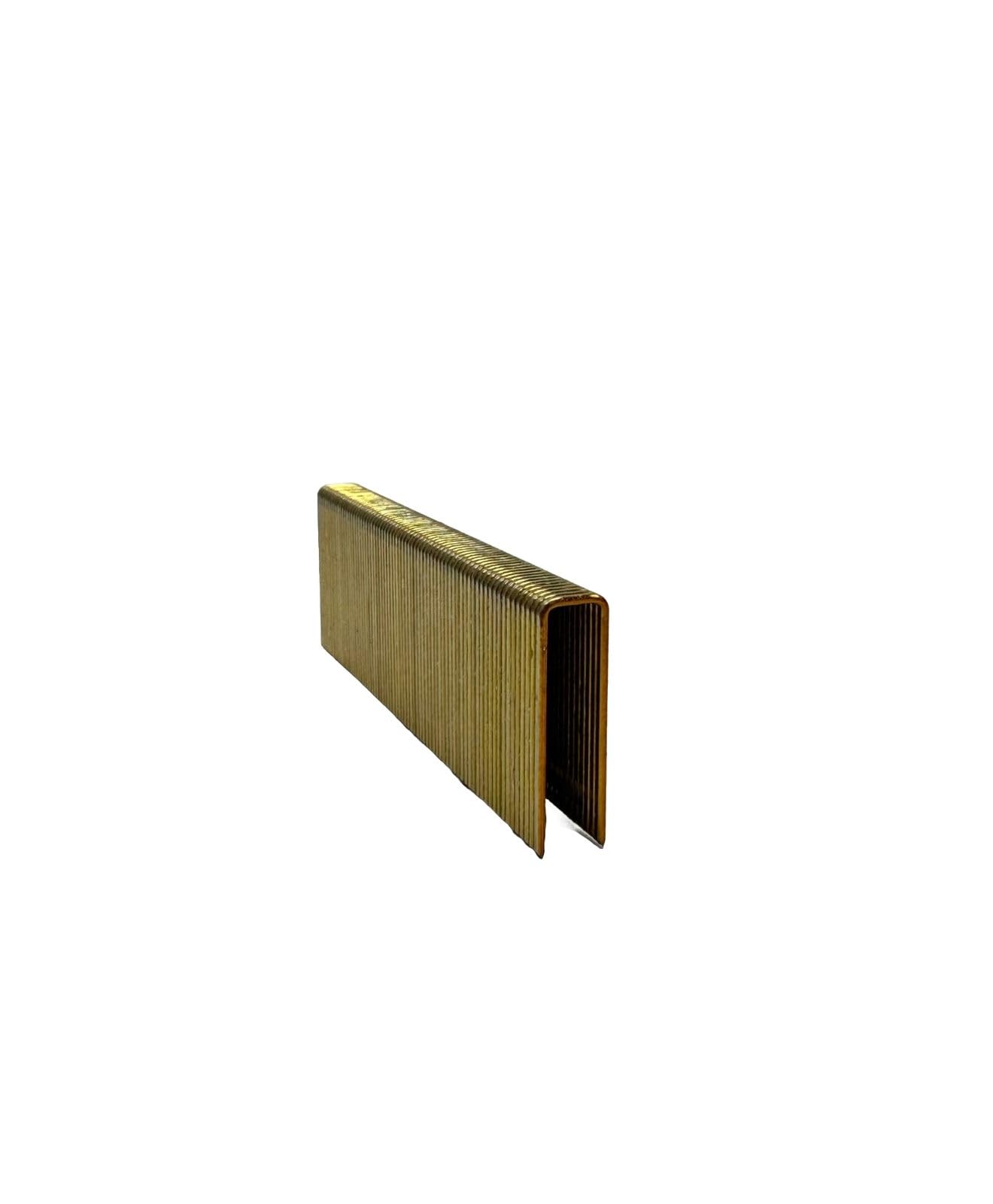
Many compatible medium crown staplers use 16 Gauge 7/16-inch N-Style Medium Crown Staples. Electrogalvanized versions are widely selected because they offer corrosion resistance, reliable feeding, and dependable performance across demanding construction projects.
Wide Crown Staplers
Wide crown staplers are designed for applications that require maximum holding surface and stronger material retention.
Heavy-Duty Construction
Roofing, cabinet hardware, furniture manufacturing and lathing often require wider crown staples because they distribute pressure over a larger surface area.
Better Material Support
A wider crown helps reduce pull-through on materials that experience movement, vibration, or continuous loading during service.
Compatible Staples
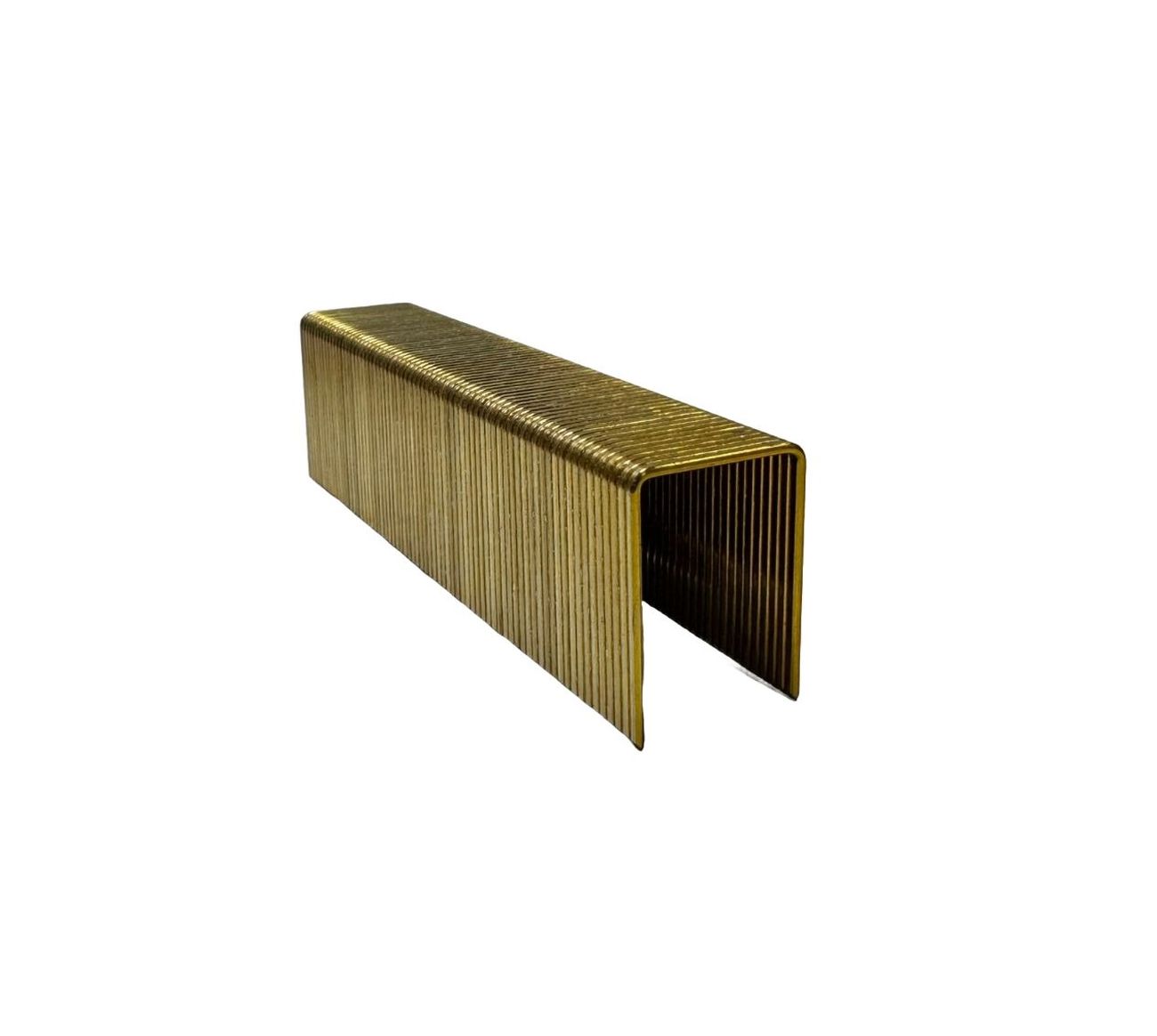
Many professional wide crown staplers are compatible with 16 Gauge 15/16-inch GWS-Style Wide Crown Staples. Electrogalvanized staples are commonly chosen for their corrosion resistance, dependable feeding, and consistent fastening performance.
Crown Staple Sizes Explained
Selecting the correct staple size is just as important as choosing the right stapler. Crown width, gauge and leg length all influence holding strength, penetration and tool compatibility.
Crown Width
Crown width affects how much surface area the staple covers. Wider crowns improve material support while narrower crowns are preferred where appearance is important.
Gauge
Staple gauge determines wire thickness. Thicker wire generally provides greater strength for demanding construction and structural fastening applications.
Leg Length
Leg length should match the combined thickness of the materials being joined. Proper penetration helps create a secure long-lasting connection.
Staple Length
Different projects require different staple lengths. Using a staple that is too short reduces holding strength while excessive length may damage the workpiece.
Wire Thickness
Wire thickness contributes to overall staple strength and resistance to bending during installation.
Crown Staple Size Comparison
| Staple Type | Typical Crown Width | Common Applications | Typical Holding Power |
| Narrow Crown | Small | Cabinets Trim Furniture | Medium |
| Medium Crown | Medium | Flooring Sheathing Decking Fencing Pallets | High |
| Wide Crown | Wide | Roofing Cabinet Hardware Lathing Heavy Construction | Very High |
Choosing the correct staple size improves fastening strength reduces compatibility issues and helps your crown stapler perform consistently throughout the project.
Medium Crown vs Wide Crown Staples
Choosing between medium and wide crown staples depends on the material being fastened and the holding power required.
| Feature | Medium Crown Staples | Wide Crown Staples |
| Crown Width | Approximately 7/16 inch | Approximately 15/16 inch |
| Typical Applications | Floor decking Sub-floor Roof decking Sheathing Wood fencing Pallets | Roofing Cabinet hardware Furniture Lathing Heavy-duty construction |
| Holding Surface | Balanced | Larger |
| Holding Power | High | Very High |
| Typical Industries | Construction Flooring Framing Pallet Manufacturing | Roofing Cabinet Manufacturing Furniture Construction |
| Compatible Staplers | Medium Crown N-Style Staplers | Wide Crown GWS-Style Staplers |
Both staple categories serve different purposes. Medium crown staples are well suited for structural wood fastening where balanced holding power is required. Wide crown staples provide a larger bearing surface and are commonly selected for applications that demand greater material support and pull-through resistance.
Choosing the Right Crown Staple
Selecting the right staple is just as important as choosing the correct crown stapler. Matching the staple to your application improves fastening quality tool performance and long-term reliability.
Material
Always consider the material you are fastening. Solid wood plywood engineered panels, roofing materials and fencing all require different staple characteristics for dependable performance.
Crown Width
Choose crown width according to the amount of surface support needed. Wider crowns spread pressure over larger materials while medium crowns suit many structural wood applications.
Gauge
Staple gauge affects wire thickness and overall strength. Sixteen gauge staples are commonly selected when greater durability and stronger fastening are required.
Leg Length
Select a leg length that provides enough penetration without extending too far through the material. Proper penetration creates stronger and safer fastening.
Indoor or Outdoor Use
Indoor and outdoor projects have different environmental demands. Outdoor applications often require staples that provide improved resistance against moisture and corrosion.
Corrosion Resistance
Electrogalvanized staples add an extra layer of corrosion resistance. They are commonly used where occasional moisture exposure may affect standard steel staples.
Holding Strength
Heavy construction projects require greater holding strength than decorative finish work. Select staple dimensions that match the expected load and material thickness.
Tool Compatibility
Always confirm your stapler is designed for the staple gauge crown width and collation style you plan to use. Proper compatibility improves feeding and reduces unnecessary jams.
Understanding Staple Materials and Finishes
The staple material and finish directly affect durability, corrosion resistance and long-term performance. Selecting the correct finish helps extend the service life of the fastening.
Steel Staples
Steel staples provide excellent strength for many construction, woodworking and manufacturing applications. They are commonly used where high holding power is required.
Electrogalvanized Staples
Electrogalvanized staples include a protective zinc coating that helps improve corrosion resistance. They are widely used in construction, woodworking, roofing and general manufacturing where added durability is beneficial.
Stainless Steel Staples
Stainless steel staples offer excellent resistance to rust in demanding environments. They are often selected where long-term exposure to moisture is expected.
Coated Staples
Some staples include additional coatings that improve driving performance, reduce friction, and help maintain smoother feeding during repetitive fastening applications.
Why Staple Quality Matters
Professional results depend on more than the stapler itself. High-quality staples improve productivity, fastening consistency, and overall job site efficiency.
Fewer Jams
Accurately manufactured staples feed more consistently through compatible staplers. This helps reduce interruptions and keeps production moving throughout the workday.
Better Penetration
Uniform wire dimensions allow staples to enter materials more consistently. Better penetration improves fastening quality while reducing damaged workpieces.
Consistent Driving
Consistent staple dimensions help every staple seat at a similar depth. This creates cleaner work and reduces the need for rework.
Stronger Fastening
Quality staples maintain their shape while entering the material. This improves holding strength and creates dependable fastening across demanding construction applications.
Reduced Downtime
Reliable staples reduce tool stoppages and production delays. Less downtime means greater productivity for contractors manufacturers and production facilities.
Common Crown Stapler Mistakes
Avoiding common mistakes helps improve fastening quality and extends both tool and staple performance.
Using the Wrong Staple Size
Incorrect staple dimensions can cause weak fastening poor penetration or feeding problems. Always match staple size with your stapler and application.
Choosing the Wrong Gauge
Using an unsuitable gauge may reduce holding strength or damage materials. Always choose the gauge recommended for your project requirements.
Incorrect Crown Width
Selecting the wrong crown width affects surface support and holding performance. Match crown width with the material and fastening purpose.
Incorrect Tool Settings
Improper driving force may leave staples proud or drive them too deeply. Correct tool adjustment helps produce consistent fastening.
Poor Tool Compatibility
Not every stapler accepts every staple style. Confirm compatibility before starting work to avoid unnecessary interruptions and damaged fasteners.
Using Low-Quality Staples
Poorly manufactured staples often create feeding issues inconsistent driving and unnecessary downtime. Quality staples help maintain smooth operation and dependable results.
Crown Stapler vs Other Fastening Tools
Crown Stapler vs Brad Nailer
Use a crown stapler when you need greater holding surface across wood panels sheathing flooring or roofing. Choose a brad nailer when appearance is more important than holding area.
Crown Stapler vs Finish Nailer
Finish nailers work well for visible trim mouldings and decorative woodwork. Crown staplers are better suited for structural fastening and concealed applications requiring wider support.
Crown Stapler vs Staple Gun
A manual or light-duty staple gun is suitable for lighter materials. Crown staplers deliver higher driving force and productivity for professional construction and manufacturing.
Crown Stapler vs Framing Nailer
Framing nailers build structural framing using nails. Crown staplers secure panels, sheathing decking and similar materials where staples provide better surface support.
Maintenance Tips
Proper maintenance helps improve reliability, extends tool life, and supports consistent fastening performance.
Clean the Tool Regularly
Remove dust, wood chips and debris from the magazine and nose area. Clean tools feed staples more consistently.
Lubricate Moving Parts
Follow the manufacturer’s maintenance recommendations for lubrication. Proper lubrication reduces wear and supports smooth tool operation.
Store Properly
Keep your stapler and staples in a clean dry location. Proper storage helps reduce moisture exposure and unnecessary corrosion.
Prevent Jams
Always load compatible staples correctly and inspect the magazine before use. Proper loading helps reduce feeding issues.
Check Compatibility
Confirm staple gauge, crown width and collation style before every project. Small compatibility mistakes can create major production delays.
Store Staples Correctly
Protect staples from moisture dirt and physical damage. Well-stored staples maintain their condition and feed more consistently.
Choose Quality Crown Staples for Reliable Bulk Supply
Whether you manufacture furniture build homes install roofing or produce pallets your fastening performance depends on selecting compatible crown staples.
Consistent dimensions reliable feeding corrosion-resistant finishes and dependable holding strength all contribute to better productivity.
If your business purchases crown staples in bulk choosing a trusted supplier helps maintain consistent quality across every production run and construction project.
Conclusion
A crown stapler is one of the most versatile fastening tools used in professional construction woodworking and manufacturing. However the tool is only one part of the system. Selecting the correct crown width gauge leg length and staple finish has a direct impact on fastening strength productivity and long-term performance. Understanding these factors helps you choose the right staple for every application and achieve consistent professional results.
Read More:
Leading High-Quality Fastener Manufacturer & Dealer in USA
Different Types of Fasteners and Their Uses Explained
What Are Fasteners? Types, Uses & Applications in Construction & Industrial Projects
What Size Nails for Framing? Framing Nail Sizes Complete Guide
Frequently Asked Questions
What is a crown stapler?
A crown stapler is a professional fastening tool that drives construction-grade staples into materials such as wood plywood sheathing flooring roofing and furniture components.
What is the crown on a staple?
The crown is the flat top section that connects both staple legs. Its width affects holding surface and material support.
What size staples does a crown stapler use?
The required staple size depends on the stapler design. Always match the gauge crown width and leg length recommended for your tool.
What is the difference between medium and wide crown staples?
Medium crown staples are commonly used for structural wood applications. Wide crown staples provide greater surface contact for applications such as roofing furniture and lathing.
What is a 16 gauge crown staple?
A 16 gauge crown staple uses thicker wire than lighter-duty staples and is commonly selected for demanding construction and manufacturing work.
Can one stapler use different crown widths?
No. Most crown staplers are designed for a specific crown width and compatible staple type.
Which staple should I use for roofing?
Wide crown staples are commonly chosen for many roofing applications because they provide increased surface support and improved pull-through resistance.
Which staple works best for flooring?
Medium crown staples are widely used for floor decking and sub-floor installation because they provide balanced holding strength.
Are electrogalvanized staples rust-resistant?
Yes. Electrogalvanized staples include a protective zinc coating that helps improve corrosion resistance in many construction environments.
How do I know if a staple fits my stapler?
Check your stapler specifications for the correct gauge, crown width, leg length and staple style before purchasing or loading staples.