


When you’re framing walls, roofs, floors, or structural assemblies, choosing the right nail size matters more than you realize. The wrong nail can reduce holding strength, create splitting, slow installation, or even lead to failed inspections.
Most professional framers rely on a few standard nail sizes for the majority of framing work. However, the correct choice depends on the application, Nailer type, framing material, and structural requirements.
In this guide by Zeluga experts, you’ll learn which framing nail sizes are commonly used, when to use 8d, 10d, and 16d nails, and how to choose the right collated framing nails for your next project.
What Size Nails Are Used for Framing?
For most residential framing applications, 16d nails remain the standard choice. They provide the penetration and holding power needed for structural connections between framing members. Smaller nails such as 10d and 8d are typically used for specific applications like toe nailing, blocking, and sheathing.
| Application | Recommended Nail Size |
| 2×4 Wall Framing | 16d |
| 2×6 Framing | 16d |
| Toe Nailing | 10d |
| Sheathing | 8d |
| Joist Hangers | .131 Specialty Nails |
If you’re using a framing Nailer, the nail length, diameter, and collation angle must also match your tool’s specifications.
What Are Framing Nails? Types of Framing Nails
Framing nails are heavy-duty fasteners designed to create structural wood-to-wood connections. Unlike finish nails or roofing nails, framing nails are engineered to withstand both shear and withdrawal forces commonly found in building construction.
Smooth Shank Framing Nails
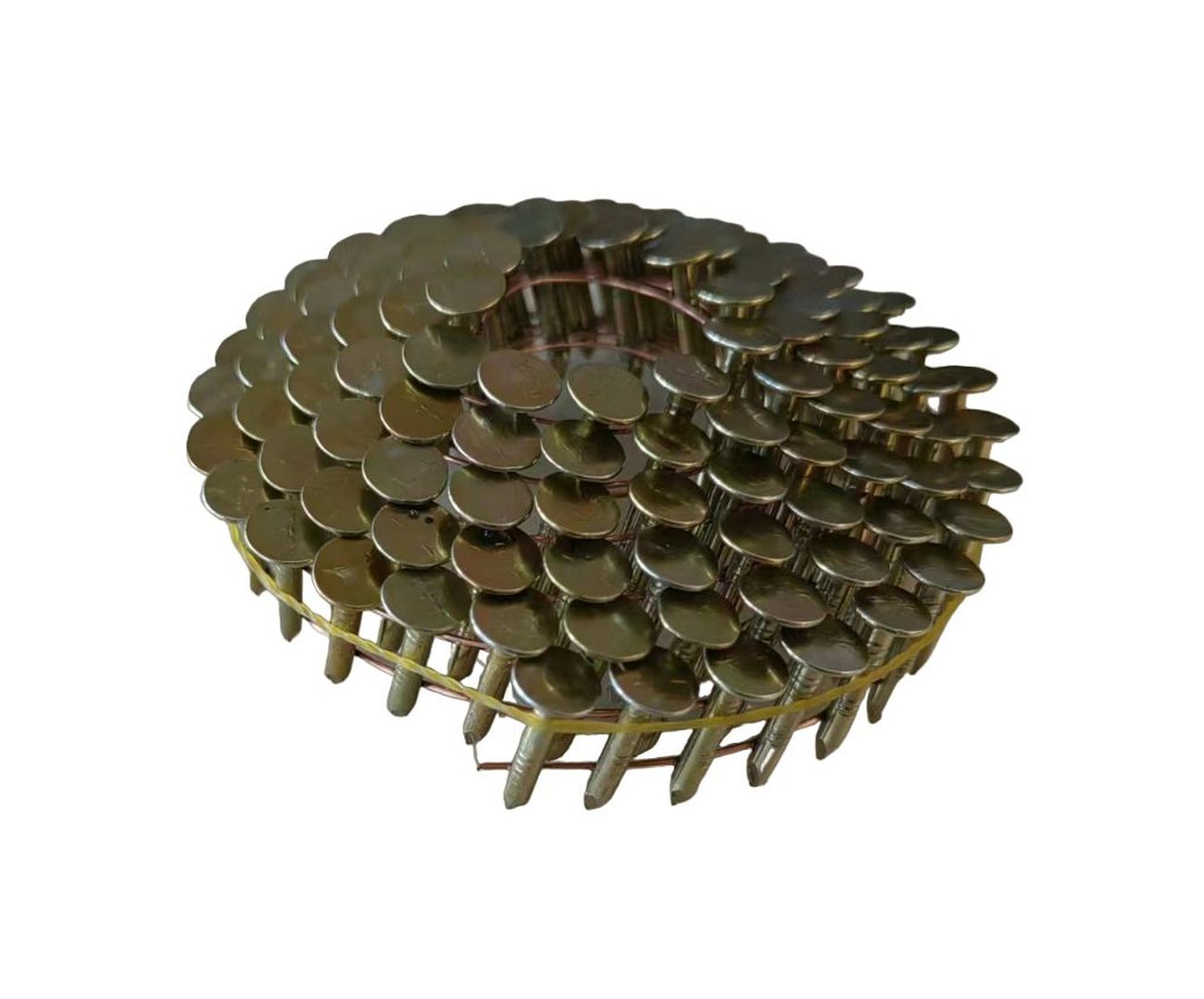
Smooth shank nails are the most common framing fastener. They drive easily, install quickly, and provide excellent shear strength for standard framing applications.
Ring Shank Framing Nails
Ring shank nails feature circular ridges along the shank. These ridges increase holding power and help prevent pullout in demanding applications.
Screw Shank Framing Nails
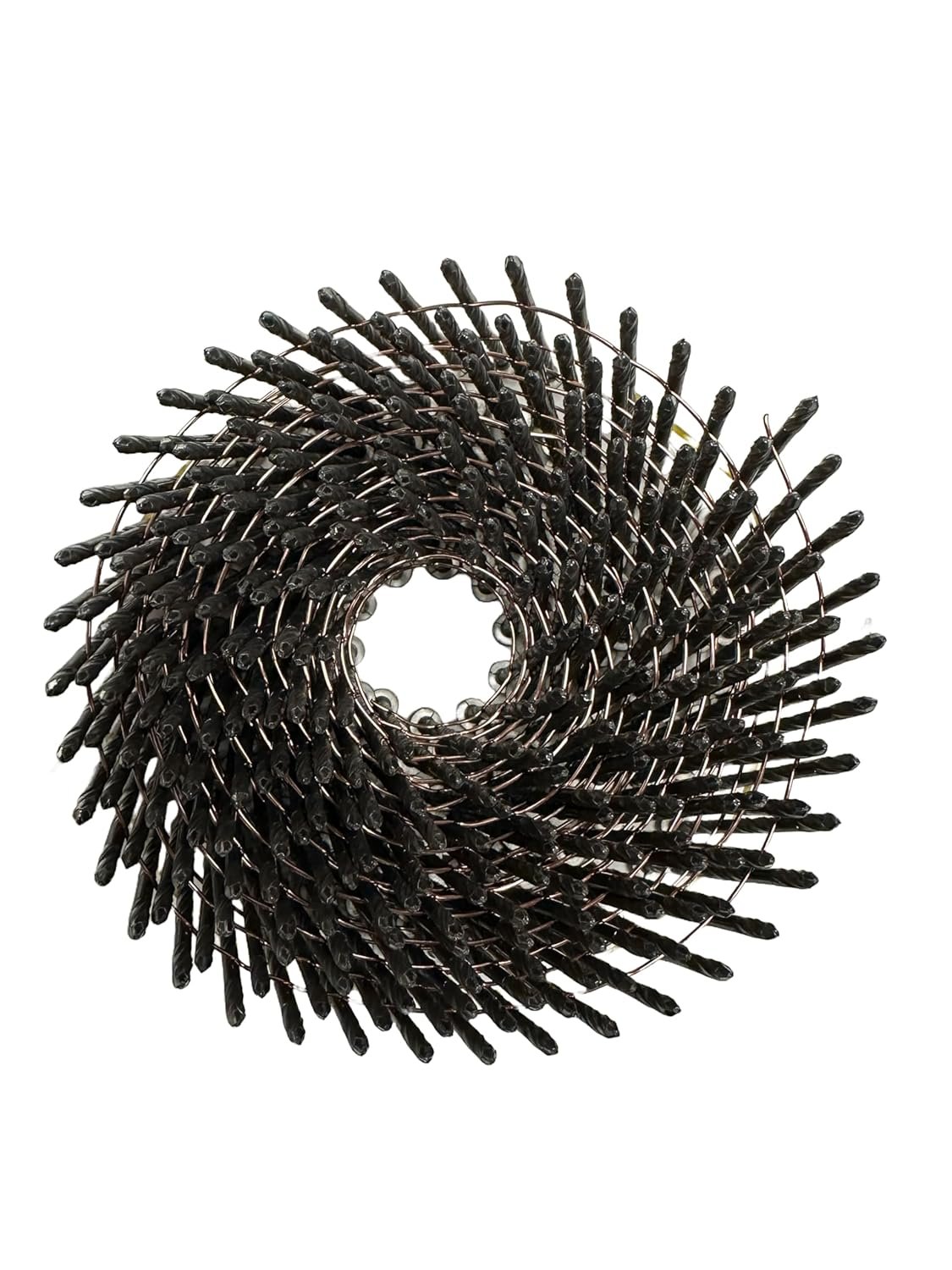
Screw shank nails combine driving speed with improved withdrawal resistance. They are often used where additional holding strength is beneficial.
Plastic Collated Framing Nails
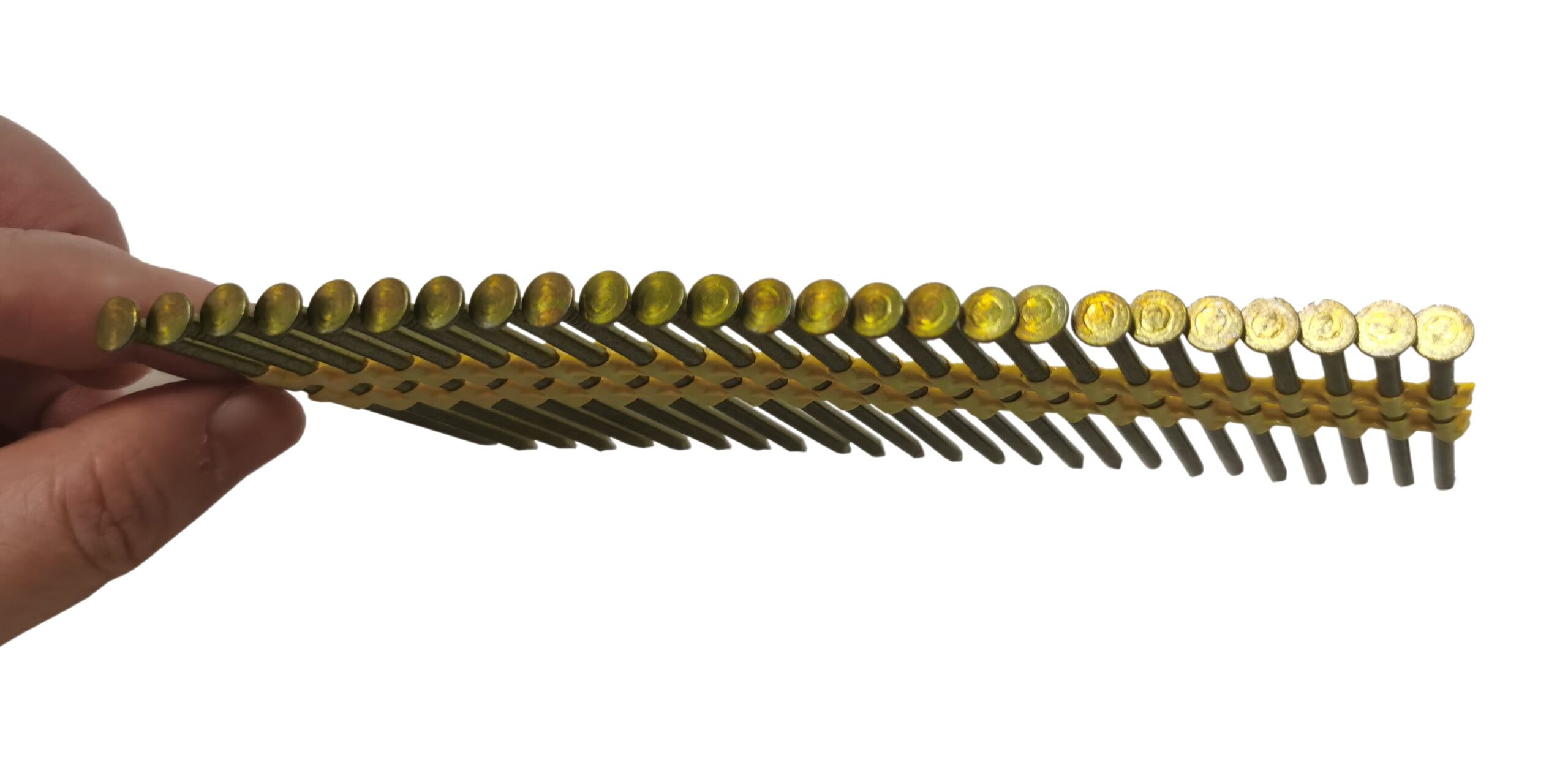
Plastic collated framing nails are commonly used in 21-degree framing nailers and remain popular for residential construction projects.
Wire Coil Framing Nails
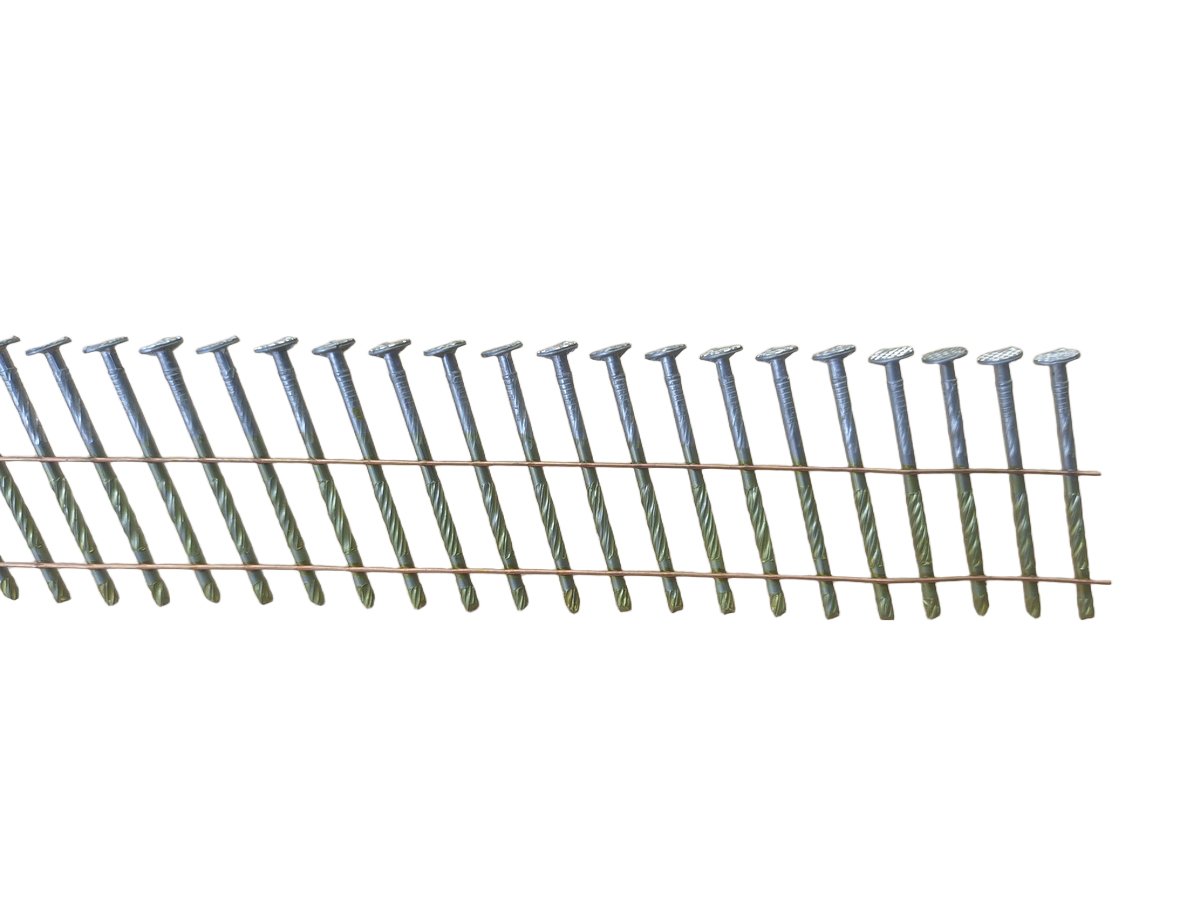
Wire collated coil nails provide high nail capacity and are frequently used by production framing crews seeking maximum efficiency.
Understanding Framing Nail Sizes
Many contractors recognize terms like 8d, 10d, and 16d, but not everyone understands where these designations originate.
The “d” stands for “penny,” an old measurement system historically used to identify nail sizes.
| Penny Size | Length |
| 8d | 2.5″ |
| 10d | 3″ |
| 16d | 3.5″ |
8d Nails
8d nails are commonly used for sheathing, subflooring, and similar applications where full structural framing penetration is not required.
10d Nails
10d nails are frequently used for toe nailing, blocking, and specific framing connections requiring slightly less penetration than a 16d nail.
16d Nails
16d nails remain the industry standard for structural wall framing, plate connections, headers, and many load-bearing framing applications.
Framing Nail Size Chart by Application
The easiest way to choose a framing nail is to match the fastener to the application.
| Application | Recommended Nail |
| Wall Framing | 16d |
| Studs to Plates | 16d |
| Toe Nailing | 10d |
| Sheathing | 8d |
| Roof Framing | 16d |
| Headers | 16d |
| Blocking | 10d |
| Joist Hangers | .131 Nails |
For framing Nailer applications, many contractors choose collated framing nails that provide equivalent holding performance while improving installation speed.
What Size Nails for Framing 2×4 Walls?
2×4 wall framing remains one of the most common framing applications in residential construction.
For most structural wall assemblies, 16d nails are the preferred choice because they provide sufficient penetration through plates and studs while maintaining strong structural connections.
What Size Nails for Framing 2×6 Walls?
The same 16d nail commonly used in 2×4 framing is also widely used in 2×6 wall construction.
Because 2×6 walls often support greater loads and are frequently used in exterior wall assemblies, maintaining proper nail penetration becomes even more important.
8d vs 10d vs 16d Nails
| Type | Length | Common Use |
| 8d | 2.5″ | Sheathing |
| 10d | 3″ | Toe Nailing |
| 16d | 3.5″ | Structural Framing |
The best nail size depends on the application.
- If you’re installing wall sheathing, an 8d nail is typically sufficient.
- If you’re toe nailing framing members, a 10d nail often works well.
- If you’re constructing load-bearing walls, headers, plates, or structural assemblies, a 16d nail is generally the preferred choice.
What Size Nails for a Framing Nail Gun?
Many contractors today rely on pneumatic framing nailers rather than hand-driving framing nails.
The biggest difference is that framing nailer nails must match the nail gun’s required collation angle and magazine design.
15° Coil Framing Nails
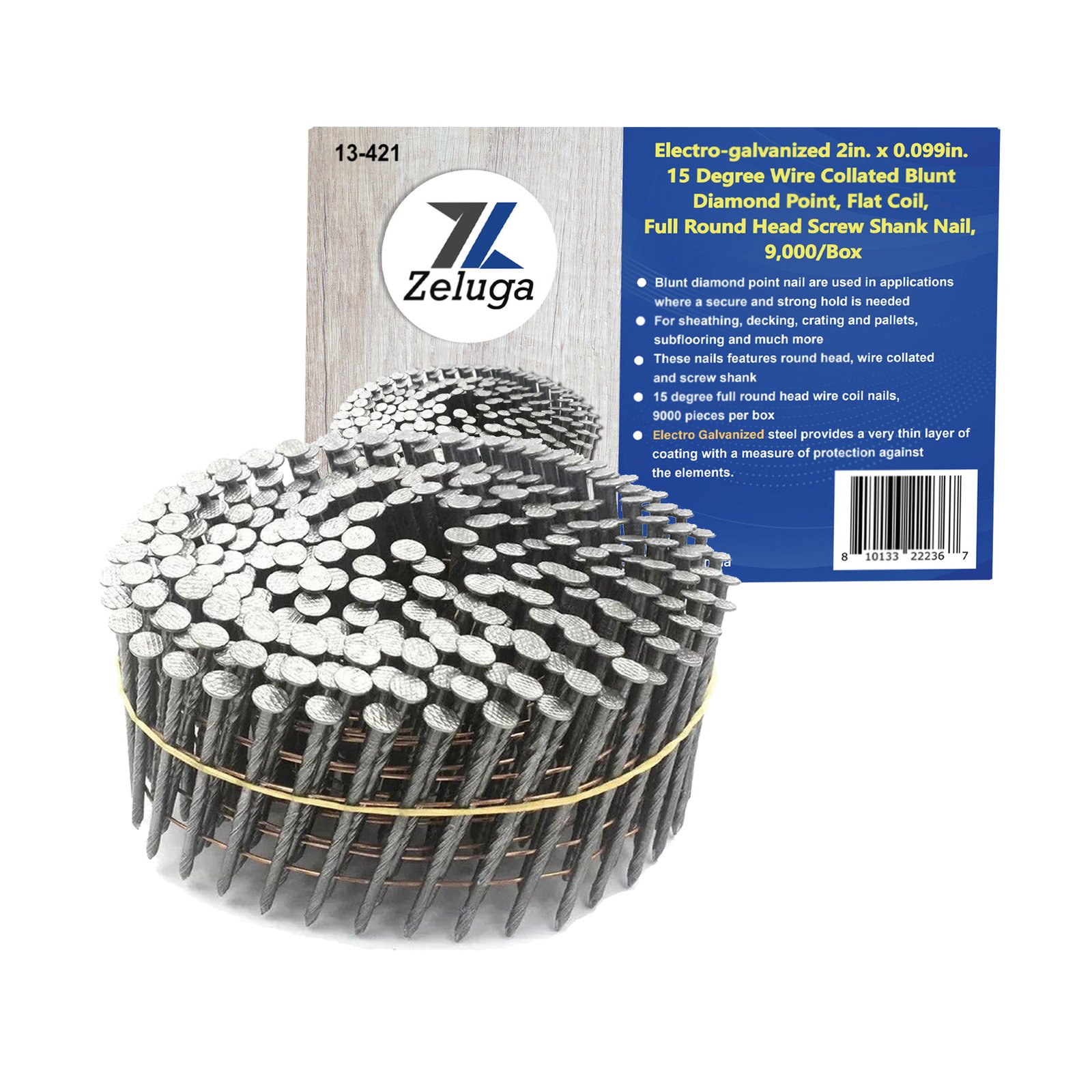
15-degree wire collated coil nails are commonly used by production framing crews because they offer high magazine capacity and fewer reloads.
Examples include wire collated framing nails similar to products such as 13-529 and 13-421.
21° Plastic Collated Framing Nails
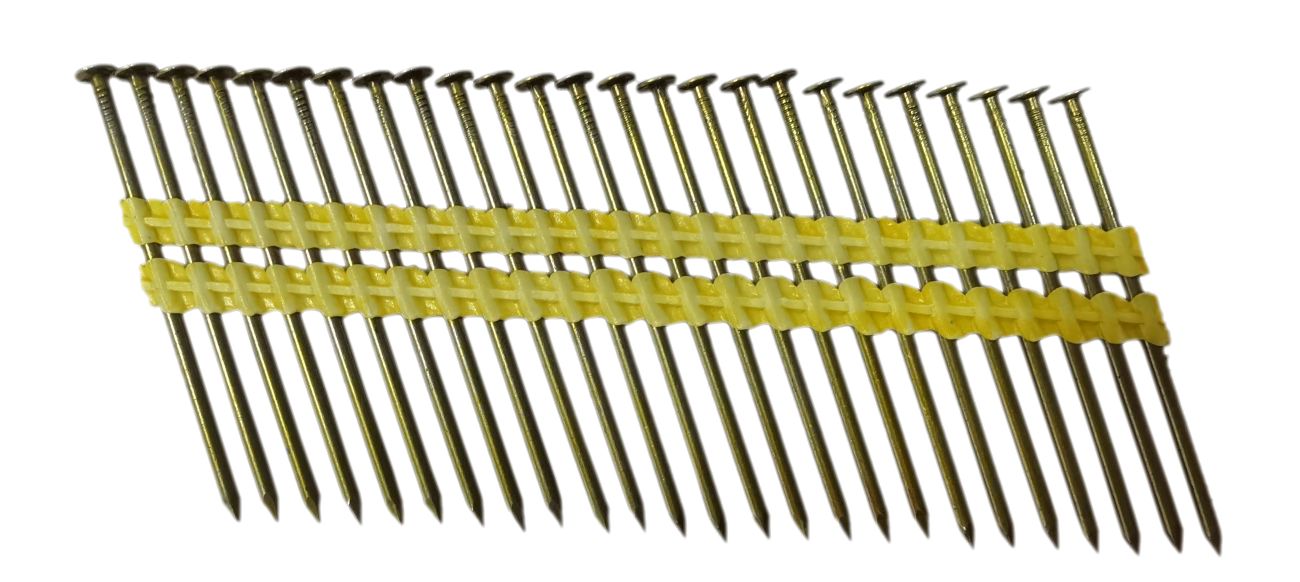
21-degree plastic collated framing nails are widely used for residential framing projects and general construction work.
Examples include framing nails similar to 13-286 and 13-254.
30° Paper Tape Framing Nails
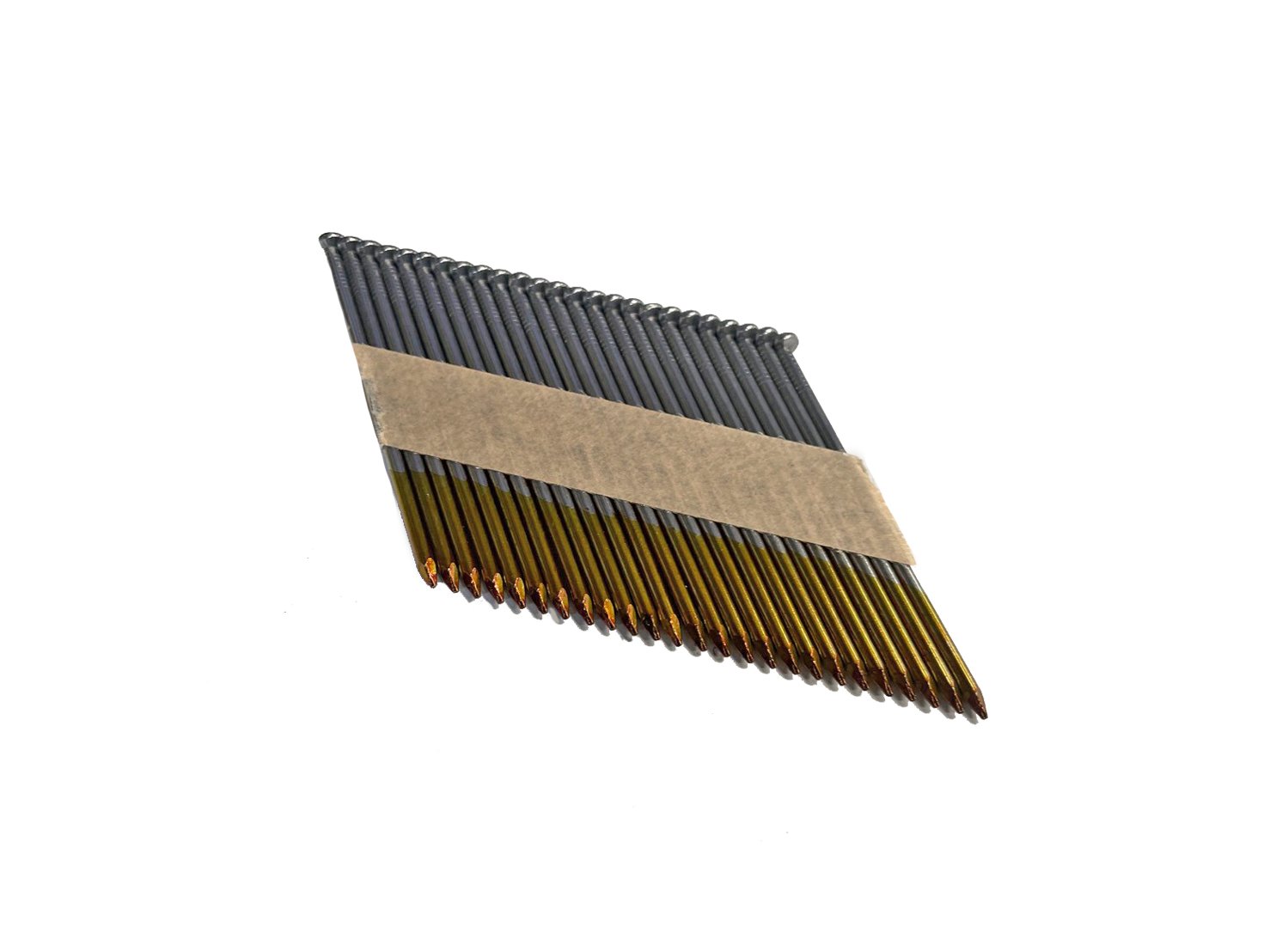
30-degree paper tape framing nails are often selected when working in tighter spaces where a steeper nail angle improves accessibility.
Examples include products similar to 13-533.
15° vs 21° vs 30° Framing Nails
If you use framing nailers regularly, nail angle matters just as much as nail size. The angle determines which nails fit your nailer and how efficiently you can work on the jobsite.
| Nail Type | Collation | Common Use |
| 15° | Wire Coil | Production Framing |
| 21° | Plastic | Residential Construction |
| 30° | Paper Tape | Tight Access Areas |
15° Framing Nails
15-degree framing nails are usually wire-collated coil nails. Because they are stored in coils, the nailer holds more fasteners before reloading. This makes them popular among production framing crews working on large residential and commercial projects.
Products similar to 13-529 and 13-421 are commonly used in high-volume framing environments where speed and productivity are priorities.
21° Framing Nails
21-degree plastic collated nails are one of the most common choices in residential construction. They provide reliable performance and are compatible with many framing nailers used by contractors throughout the industry.
Examples include products similar to 13-286 and 13-254.
30° Framing Nails
30-degree paper tape nails allow the nailer to access tighter spaces. They are often used when framing corners, partitions, and confined areas where maneuverability becomes important.
Products such as 13-533 are examples of this style of framing nail.
Framing Nail Shank Types Explained
Not all framing nails use the same shank design. The shank affects holding power, driving performance, and resistance to pullout.
Smooth Shank Nails
Smooth shank nails are the standard choice for most framing applications. They drive quickly and offer excellent shear strength. Most structural framing projects use smooth shank nails successfully.
Ring Shank Nails
Ring shank nails feature circular ridges along the nail body. These ridges increase withdrawal resistance and improve holding strength in demanding applications.
They are commonly used in subfloors, sheathing, and applications where movement or vibration may occur.
Screw Shank Nails
Screw shank nails twist into the wood during installation. This creates excellent holding power and strong resistance against pullout.
Many professional framers prefer screw shank coil nails when additional retention strength is required.
Nail Diameter Guide (.099 vs .120 vs .131)
Many discussions focus on nail length. However, diameter is equally important because it affects both strength and holding performance.
| Diameter | Common Application |
| 0.099 | Light Framing |
| 0.12 | General Framing |
| 0.131 | Structural Framing |
These nails are commonly used in lighter framing and sheathing applications where extreme structural strength is not required.
.120 Diameter Nails
This is one of the most common framing nail diameters. It provides a good balance between penetration, strength, and ease of driving.
Products such as 13-533 use a .120-inch diameter and are suitable for many framing applications.
.131 Diameter Nails
When maximum structural performance is needed, many contractors choose .131-inch diameter nails. They provide increased strength and are often used for structural connectors and hardware.
Products similar to 13-496 fall into this category.
Framing Nails vs Roofing Nails vs Siding Nails
One mistake many buyers make is assuming all construction nails perform the same job. They do not.
Each nail type is designed for a specific application.
| Nail Type | Primary Use |
| Framing Nails | Structural Framing |
| Roofing Nails | Roofing Materials |
| Siding Nails | Exterior Cladding |
Framing Nails
Framing nails are designed for structural wood connections. They typically use larger diameters and longer lengths to handle structural loads.
Roofing Nails
Roofing nails use larger heads to secure shingles and roofing materials. They are not designed for structural framing connections.
Examples include products similar to 13-362 and 13-364.
Siding Nails
Siding nails are designed for attaching exterior cladding materials. Corrosion resistance is often an important requirement.
Examples include products similar to 13-542 and 13-543.
Using the correct nail type improves both performance and code compliance.
What Nails Are Used for Joist Hangers?
Joist hangers require specialized fasteners.
Many contractors mistakenly assume standard framing nails can be used in structural connectors. In many cases, this is not recommended.
Joist hangers are engineered components. They require fasteners with specific diameters, lengths, and load capacities.
A common choice is a .131-inch diameter joist hanger nail designed specifically for hardware installation.
Products such as 13-496 are examples of nails intended for this application.
Always verify the fastener requirements specified by the hardware manufacturer.
How to Choose Framing Nails for Your Nailer
Before ordering framing nails, review these six factors.
Nail Angle
Confirm whether your nailer requires 15°, 21°, 30°, or another angle.
Nail Length
Choose the length appropriate for the framing application.
Nail Diameter
Match the diameter to the structural requirements of the project.
Head Style
Verify whether your nailer accepts full round head or clipped head nails.
Collation Type
Determine whether your nailer uses wire collated, plastic collated, or paper tape nails.
Corrosion Resistance
Galvanized coatings are often preferred for exterior applications and treated lumber.
Conclusion
orrect framing nail is not complicated once you understand the basics. For most structural framing applications, 16d nails remain the preferred choice. For sheathing, toe nailing, and specialty applications, smaller sizes may be more appropriate.
You should also consider nail diameter, shank type, collation style, and nailer compatibility before making a purchase decision. When these factors are matched correctly, you get stronger connections, smoother installation, and better overall jobsite performance.
Need Bulk Framing Nails for Your Next Project?
Whether you manage residential framing crews, commercial construction projects, building supply distribution, or industrial procurement, choosing the correct framing nail helps improve productivity and jobsite performance.
Zeluga supplies framing nails, coil nails, joist hanger nails, siding nails, roofing nails, and nail gun fasteners for contractors, distributors, and industrial buyers across the United States.
Contact the team for product specifications, bulk pricing, and sourcing support.
- Mail: contact@zeluga.com
- Phone: 888 252 4252
Read More:
Leading High-Quality Fastener Manufacturer & Dealer in USA
Different Types of Fasteners and Their Uses Explained
What Are Fasteners? Types, Uses & Applications in Construction & Industrial Projects
FAQs
What framing nail sizes are most commonly purchased in bulk?
16d framing nails, 21-degree framing nails, 30-degree framing nails, and coil framing nails are among the most frequently ordered products.
Can framing nails be supplied in pallet quantities?
Yes. Many suppliers provide pallet-level quantities for contractors, distributors, and industrial buyers.
Do framing nails meet construction industry standards?
Professional framing nails are typically manufactured to meet dimensional and performance requirements used throughout the construction industry.
What is the difference between wire collated and plastic collated framing nails?
Wire collated nails are typically supplied in coils, while plastic collated nails are commonly used in stick nailers.
Are galvanized framing nails available?
Yes. Galvanized options are commonly used for exterior projects and treated lumber applications.
How do I choose the correct framing nail angle?
The angle must match your nailer’s specifications. Common options include 15°, 21°, and 30°.
What nail diameter is best for structural framing?
Many structural framing applications use diameters ranging from .120 to .131 inches.
Can framing nails be customized for private label programs?
Many manufacturers offer custom packaging, branding, and private label options for qualified volume buyers.
What information should I provide when requesting a quote?
Include nail length, diameter, angle, collation type, finish, estimated quantity, and delivery location.
How can I ensure framing nail compatibility with my nailer?
Always verify the nail angle, head style, diameter range, and collation system recommended by the nailer manufacturer.