
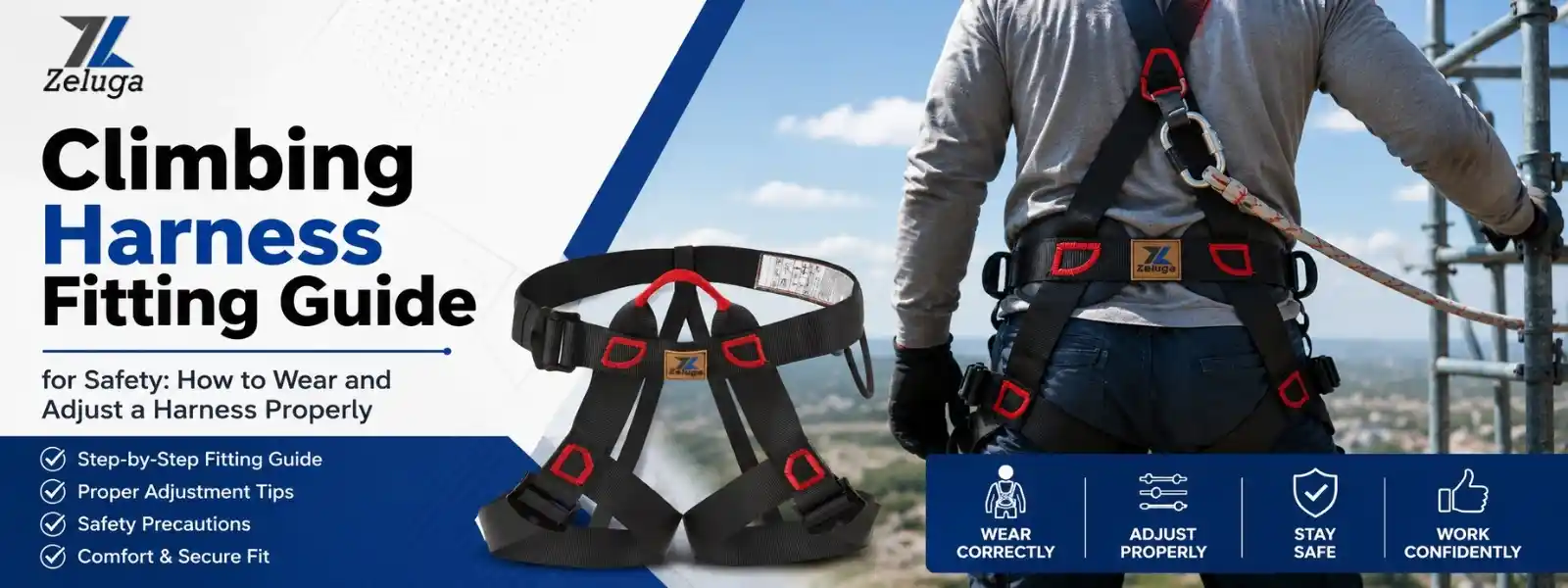
If you use a climbing harness for work, it is one of the most important pieces of personal protective equipment you wear. A correctly fitted harness helps keep you secure while climbing, positioning, or working at height. A poorly fitted harness can reduce comfort, affect movement, and increase safety risks.
This guide explains climbing harness fit, harness sizing, harness adjustment, and safety checks in simple language, so you know exactly what to look for before every use.
Understand the Main Parts of a Climbing Harness
Before you adjust your harness, you should understand what each part does. Every component has a specific purpose. Knowing these parts helps you perform a proper safety check and avoid common fitting mistakes.
Waist Belt
Your waist belt is the most important part of your climbing harness fit. Position it just above your hip bones and tighten it securely. It should stay in place during movement and support you if you hang in the harness.
Leg Loops
Your leg loops help spread your weight while hanging and keep the harness stable. Adjust them so they feel snug without creating pressure points. You should still be able to move, climb, squat, and step comfortably.
Belay Loop
The belay loop is the main connection point used during climbing. It connects the waist belt and leg loops together. Always keep it centred at the front after completing every harness adjustment.
Gear Loops
Gear loops are designed only for carrying climbing equipment such as carabiners and other climbing gear. They are not load-bearing components. Never attach yourself or any fall protection system to a gear loop.
How to Choose the Correct Harness Size
A safe harness starts with proper harness sizing. Do not guess your size based on trousers or workwear. Measure your body carefully before selecting a harness.
Measure Your Waist Correctly
Wrap a flexible tape measure around your waist where the harness will naturally sit. This position is usually just above your hip bones. Accurate measurements help you select the correct size and improve overall climbing harness fit.
Measure Your Upper Thigh
Measure around the widest part of your upper thigh where the leg loops will rest. This helps you choose leg loops that support movement while remaining comfortable during climbing or working at height.
Why Clothing Size Is Not a Reliable Guide
Your trouser size does not always match harness sizing. Different manufacturers use different size ranges. Your body measurements provide a much more reliable way to select the correct climbing harness.
Understanding Different Body Shapes
Every person has different waist and thigh proportions. Two workers with the same waist measurement may need different leg loops. Always try available sizing options and choose the one that feels secure and balanced
Step-by-Step Guide to Wearing and Adjusting a Climbing Harness
A correct harness adjustment takes only a few minutes. Follow each step carefully before climbing or working at height.
Step 1. Loosen the Adjustment Straps
Start by loosening all adjustment straps. This makes it easier to put the harness on correctly and helps prevent twisted webbing during the fitting process.
Step 2. Step Into the Leg Loops
Step into each leg loop one leg at a time. Make sure the harness is facing the correct direction and that the straps remain flat without twists.
Step 3. Position the Waist Belt Above Your Hip Bones
Pull the harness up until the waist belt sits just above your hip bones. This position helps prevent the harness from slipping downward if it becomes loaded.
Step 4. Tighten the Waist Belt
Tighten the waist belt until it feels snug but not restrictive. It should not slide over your hips. You should still breathe comfortably while maintaining a secure fit.
Step 5. Adjust the Leg Loops
Tighten the leg loops evenly. They should support your weight without restricting circulation or limiting movement. Walk, bend, and lift your knees to confirm a comfortable fit.
Step 6. Check That the Belay Loop Is Centered
After adjusting the waist and legs, confirm that the belay loop sits in the centre of your body. A centred loop indicates balanced harness adjustment and proper positioning.
Step 7. Secure Loose Webbing and Buckles
Secure all loose webbing after tightening the harness. If your harness uses a double-back buckle, confirm it is threaded correctly. If it uses an auto-lock buckle, check that it has fully locked before use.
How Tight Should a Climbing Harness Be?
Your climbing harness should feel secure without becoming uncomfortable. A properly adjusted waist belt stays above your hip bones and should not slide over them. Many professionals use a simple flat-hand check.
You should be able to slide a flat hand between your waist and the harness, but not easily pull the harness away from your body. You should also breathe normally and move through a full range of motion without the harness shifting during use.
Perform a Safety Fit Check Before Every Climb
Never assume yesterday’s adjustment is still correct. Complete a quick harness inspection before every climb or work shift.
Visual Inspection
Look over all webbing, tie-in points, stitching, and adjustment straps. Make sure nothing appears twisted, damaged, or excessively worn before putting the harness into service.
Check All Buckles and Adjustments
Inspect every buckle carefully. Confirm each double-back buckle or auto-lock buckle is correctly secured. Recheck every adjustment after moving around because straps can shift while you work.
Perform a Hang Test
Standing alone cannot confirm proper climbing harness fit. Perform a controlled hanging test whenever possible. Hanging briefly allows you to check comfort, stability, and overall fit under real load.
Partner Safety Check
If you work with another person, ask them to inspect your harness before climbing. A second set of eyes can often spot loose straps, twisted webbing, or incorrect adjustments that you might miss.
Follow Manufacturer Instructions
Every harness is designed differently. Always follow the manufacturer’s fitting, adjustment, inspection, and maintenance instructions for your specific model. Never assume all climbing harnesses adjust in exactly the same way.
Common Climbing Harness Fitting Mistakes
Even a high-quality harness cannot protect you if it is fitted incorrectly. Many climbing harness safety issues happen because of simple adjustment mistakes. Learn to spot these problems before every climb or work shift.
Waist Belt Below the Hip Bones
Never wear the waist belt below your hip bones. A low waist belt may move during loading and reduce the secure climbing harness fit needed for safe climbing.
Loose Waist Belt
Your waist belt should never feel loose. If you can pull it down over your hips after waist belt adjustment, tighten it again before using your climbing equipment.
Overly Tight Waist Belt
Do not overtighten the waist belt. It should feel secure but still allow normal breathing and comfortable movement. A painfully tight harness can reduce comfort and mobility.
Loose Leg Loops
Loose leg loops reduce stability and may affect your body position while hanging. Adjust them until they feel secure without restricting circulation or limiting your movement.
Twisted Straps
Always straighten every strap before tightening your harness. Twisted webbing can reduce comfort, make adjustments difficult, and interfere with a proper safety check before climbing.
Incorrectly Threaded Buckle
If your harness uses a double-back buckle, thread it exactly as instructed by the manufacturer. An incorrectly threaded buckle can reduce security during use.
Clipping Into Gear Loops
Never attach yourself to gear loops. They are designed only to carry climbing gear and are not rated as tie-in points or fall protection attachment points.
Choosing the Wrong Size
Do not rely on clothing size alone. Proper harness sizing should always be based on your body measurements and the manufacturer’s sizing guide.
Skipping the Hang Test
Do not assume your harness fits correctly while standing. A controlled hanging test helps confirm proper adjustment and comfort under load before climbing.
Harness Fit for Different Climbing and Work-at-Height Applications
Different jobs require different harness designs. However, every harness still depends on correct sizing, proper adjustment, routine inspection, and following the manufacturer’s instructions.
Indoor Gym Climbing
An indoor climbing harness is usually lightweight and simple to adjust. Focus on a secure waist belt, balanced leg loops, and a proper belay loop position before every climb.
Outdoor Rock Climbing
A sport climbing harness or trad climbing harness may carry additional climbing gear. Make sure your harness remains comfortable while moving, climbing, and hanging for longer periods.
Tree Climbing and Arborist Work
Tree work often involves longer periods of suspension. A half-body arborist harness should fit securely, distribute weight evenly, and allow comfortable movement while working around branches.
Utility Pole and Electrical Work
Electrical safety belts and positioning harnesses are designed for specific work-at-height tasks. Always adjust them according to the manufacturer’s instructions and complete a full harness inspection before use.
Construction and General Fall Protection
Construction work normally requires a full-body fall protection harness. Correct adjustment helps distribute forces during a fall while supporting safe movement during daily work activities.
Although harness designs differ between climbing and industrial applications, the same safety principles always apply. Choose the correct harness, adjust it properly, inspect it regularly, and follow the manufacturer’s instructions every time.
Half-Body vs Full-Body Harness
| Feature | Half-Body Climbing Harness | Full-Body Fall Protection Harness |
| Typical use | Rock climbing, gym climbing, tree climbing | Construction, tower work, industrial fall protection |
| Mobility | Excellent freedom of movement | Moderate movement with greater body support |
| Main support | Waist and upper legs | Shoulders, waist, chest and legs |
| Advantages | Lightweight, comfortable, climbing focused | Better fall force distribution and worker support |
| Limitations | Not suitable for every industrial task | Less suitable for recreational climbing |
Which Type Is Right for Your Work or Activity?
Choose your harness based on the work you perform, not personal preference. A harness designed for climbing should not automatically replace a certified fall protection harness required for industrial work.
Inspecting Your Harness Before and During Its Service Life
Routine harness inspection helps you identify wear before it becomes a safety concern. Always inspect your harness before each use and after heavy use.
Webbing
Check every webbing section for cuts, abrasion, fading, or unusual wear. Clean webbing helps you notice damage more easily during routine inspections.
Stitching
Inspect every stitched joint carefully. Broken, loose, or damaged stitching may reduce harness integrity. Never attempt to repair safety stitching yourself.
Tie-In Points
Look closely at the tie-in points because they receive repeated use. Watch for excessive wear, fraying, or abrasion around these critical attachment areas.
Buckles
Inspect every double-back buckle or auto-lock buckle for damage, corrosion, bending, or poor operation. Make sure every buckle locks and adjusts smoothly.
Signs of Wear
Replace or stop using a harness if you notice cuts, heavy abrasion, corrosion, damaged stitching, fraying, deformation, or any condition that may affect safe performance.
When Should You Replace a Climbing Harness?
Replace your harness whenever inspection identifies significant damage. Age alone does not determine replacement. Consider usage frequency, UV exposure, abrasion, corrosion, storage conditions, and the manufacturer’s retirement guidance. If you are unsure whether a harness remains safe, stop using it and contact the manufacturer for advice before returning it to service.
Harness Care and Storage
Clean After Use
Remove dirt and debris after every job to help maintain your climbing equipment and improve inspection accuracy.
Store Cool and Dry
Store your harness in a cool, dry location away from direct sunlight whenever it is not being used.
Avoid Chemicals
Keep your harness away from chemicals, oils, fuels, acids, and cleaning products that may damage the webbing.
Avoid Excessive Heat
Do not expose your harness to excessive heat or open flames during storage or transport.
Protect From Sharp Edges
Keep your harness away from sharp tools and rough surfaces that may damage the webbing.
Rinse After Saltwater Exposure
If your harness contacts saltwater, rinse it with clean fresh water and allow it to dry naturally.
Dry Naturally
Always air dry your harness completely before storing it. Never force dry it using direct heat.
Choosing the Right Harness for Your Application
| Activity | Typical Harness Type |
| Indoor and outdoor rock climbing | Half-body climbing harness |
| Tree climbing | Arborist harness |
| Utility pole and electrical work | Electrical safety belt or positioning harness |
| Construction work at height | Full-body fall-protection harness |
Select your harness according to the intended activity, required safety standards, body measurements, and the manufacturer’s instructions. Never assume a harness designed for one application is suitable for another unless it is specifically approved for that purpose.
Looking for the right harness for your work? Explore Zeluga’s complete range of climbing and fall protection harnesses for professional use.
Conclusion
A safe climbing harness fit starts with the correct harness sizing, careful waist belt adjustment, properly adjusted leg loops, and a complete safety check before every use. Never rely on comfort alone to judge whether a harness fits correctly. Inspect your harness regularly, perform a hanging test whenever appropriate, and follow the manufacturer’s instructions throughout the equipment’s service life. Taking a few extra minutes before climbing or working at height helps improve both safety and confidence.
Read More:
Heavy Duty Fall Protection Safety Harnesses Manufacturer & Bulk Supplier in USA – Zeluga
What is a Safety Harness? Types, Uses & How It Works
FAQs about Climbing Harness Fitting Guide for Safety
How should a climbing harness fit?
Your harness should fit snugly above your hip bones, stay in position during movement, and not slide over your hips while allowing comfortable breathing and full movement.
How tight should a climbing harness be?
It should feel secure but not restrictive. You should be able to slide a flat hand between your waist and the harness without it feeling loose.
Can a climbing harness be too tight?
A harness that restricts breathing, creates pressure points, or limits movement should be readjusted.
Should a harness sit above the hip bones?
The waist belt should sit just above your hip bones to help keep the harness securely positioned.
Can clothing size determine harness size?
Always use body measurements and the manufacturer’s harness sizing guide rather than trouser size.
How often should you inspect a climbing harness?
Carry out a visual harness inspection before every use and perform more detailed inspections according to the manufacturer’s recommendations.
Can you wear a climbing harness over winter clothing?
Make sure the harness is adjusted correctly over your clothing and still provides a secure fit without restricting movement.
What is the difference between a climbing harness and a fall-protection harness?
A climbing harness is designed for climbing activities, while a full-body fall protection harness is designed for industrial work-at-height applications and different safety requirements.
Can a climbing harness be used for construction work?
Only if it is specifically designed, certified, and approved for that application. Always use equipment intended for the work you are performing.
How long does a climbing harness last?
Service life depends on use, storage, inspection results, environmental exposure, and the manufacturer’s retirement guidance. Replace the harness immediately if significant damage or wear is found.