
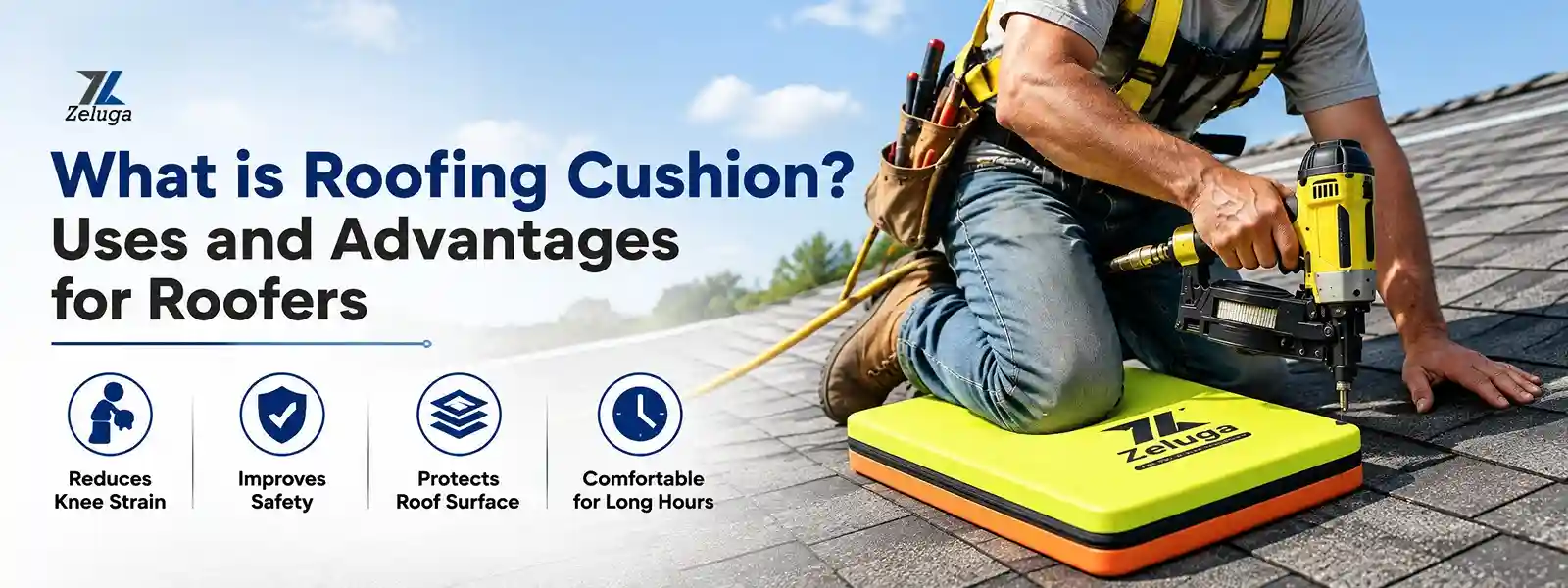
If you spend several hours each day working with shingles, metal sheets, or sloping roofs, you probably know just how physically straining the job can be due to kneeling. Roofing cushions provide you with a specialized surface that acts as a buffer between you and the roof.
What Is a Roofing Cushion?
Roofing cushions are padded surfaces used by roofers when kneeling, squatting, sitting, or moving around on the roofs as part of the installation, maintenance, or repairs.
Unlike kneeling pads that are meant for use in households, roofing cushions are required to withstand tough construction site environments. They may have more traction, more thickness, more durable foam, and sufficient surface area to cater to tough roofing operations.
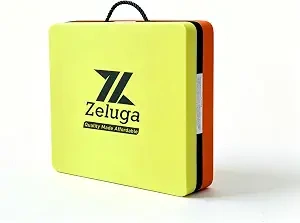
Roofing cushions provide a cushioning surface between you and the roof. That layer provides cushioning and also reduces direct contact with hard, abrasive, or heat-affected materials.
Why Do Roofers Use Roofing Cushions?
Long Kneeling
If the job takes long periods of time where your knees are bent, cushions are very useful. The thicker foam layer spreads out the pressure over the area of your knees. The goal is not to eliminate physical strain. You get additional comfort from contact with such a layer, which can ease up your knees.
Hard Roofing Surfaces
There are various types of roofs but the common thing is their hardness. For example, shingles offer a little bit of padding, whereas metal panels provide a harder surface to work with. A dedicated cushion adds another layer between you and that surface. The thickness of the cushion and its characteristics determine the amount of cushioning.
Hot Roof Surfaces
Roofing materials can become extremely hot under direct sunlight. A thick foam cushion can act as a thermal barrier between your body and the roof surface. This does not make the roof cool or remove heat exposure from the surrounding environment. It simply reduces direct contact with the hot surface where you place the cushion.
Where Can You Use a Roofing Cushion?
A roofing cushion can be used wherever you need a temporary padded surface to do the roofing work. These tasks include shingle installation, repairs, metal roofing, inspections, maintenance, and any other roofing job requiring constant interaction with the roof surface.
Asphalt Shingle Roofs
When working on the asphalt shingle roof, you probably spend much time in a kneeling position. This means that you need a surface cushioned specifically for these positions. Traction becomes especially important, as the cushion needs to stay in place and not fold up or slide whenever you change the position of your knees or move some equipment around.
Metal Roofs
Working on the metal roof creates a different environment from the asphalt shingle one. Metal roof panels are hard and could be hot. It could take some time to position them properly during the installation or repair job. The cushion, which has enough traction and durable foam, could be helpful for you.
Sloped Roofs
The slope affects the performance of the cushion. A pad that functions effectively on a slope that is relatively flat may behave differently on a steep slope. A pad that functions effectively in such an environment should be able to resist folding and have adequate surface traction.
What Makes a Good Roofing Cushion?
Foam Density and Firmness
Foam density and firmness play a role in determining the performance of a cushion under load. A soft cushion offers more cushioning compared to a firmer one that can offer good support in heavy applications. Dual-density cushions give two levels of working performance within one cushion, where you choose which side is suitable for your work without having just one level of firmness.
Thickness
Thickness determines the amount of material between the cushion and the roof surface. Thickness can help separate you from a hot or rough surface and can provide you with more cushioning. For instance, a 5-inch thick cushion has more material underneath compared to thin foam kneeling pads. Nevertheless, thickness needs to be taken into account alongside foam quality and stability.
Traction
This is an important consideration when dealing with your cushion in roofing materials. If you have a cushion that can easily slide, then you will find it hard to use, especially when you are dealing with inclined surfaces. Find a cushion whose surface is made to provide traction on the roof instead of just being soft. Traction is there to ensure your stability and not to act as a fall protection measure.
Size
The bigger the cushion, the larger the working area you have. For instance, a cushion measuring 23 inches by 23 inches gives you much more working space compared to smaller ones like knee pads. The extra surface can be used in different working conditions and even for other jobs besides cushioning. Size also affects storage and transportation, so consider how you move equipment.
Benefits of Using a Roofing Cushion
Enhanced Comfort While Kneeling
A roofing cushion increases the thickness and softness of the surface that your knees rest on while performing various roofing jobs. The efficiency of the cushion depends on its structure because, for instance, if a cushion is overly compressible, then it won’t be able to perform effectively.
Distance from Hot Roofs
A cushion made out of thick foam serves as an additional layer between you and the roof, so you are not exposed to the hot surfaces. Using a 5-inch-thick cushion provides a thick layer of foam to protect your knees from direct heat exposure.
Better Working Stability
Working stability increases because folding, sliding, and shifting of the cushion can interfere with the working process. High-traction foam ensures better adherence of the cushion to the roof. However, do not consider the cushion as the source of protection from falls, but just one of the features of the work surface.
Reduced Direct Contact with the Surface
The roof material can have an abrasive effect on your knees. Cushioning provides control of direct contact between your body and the roof surface. This can also be used when it comes to the placement of necessary tools and materials on the surface instead of using the finished roof directly.
Easier Movement Around the Jobsite
Portability becomes an advantage when you change the work location during the workday. You may have to move the cushion via a ladder to other parts of the roof, or from one task to another. The lightweight design with a special handle makes the process easier. It also allows you to store the cushion after the work is done.
Roofing Cushion vs. Regular Kneeling Pad
A regular kneeling pad can work well for simple tasks. However, roofing conditions can demand additional characteristics such as traction, thickness, durability, heat separation, and greater working area.
| Feature | Regular Kneeling Pad | Roofing Cushion |
| Basic cushioning | Common | Common |
| Large working area | Varies | Often useful |
| Roof-focused traction | Varies | Important |
| Heat separation | Varies | Useful |
| Heavy-duty foam | Varies | Often prioritized |
| Multiple jobsite uses | Limited to moderate | Can be broader |
| Portability | Usually easy | Depends on size |
Looking for the Best Roofing Cushion for Your Roofing Job?
Choose a roofing cushion based on your working conditions, comfort needs, and jobsite demands. Zeluga is the leading manufacturer and supplier of roofing cushions in the USA, including the 23″ × 23″ × 5″ Dual-Density Roofing Cushion. With reversible foam, high traction, heat insulation, durable construction, and multiple jobsite uses, it is built for professional roofing work.
Need roofing cushions for your crews, projects, or bulk supply? Contact Zeluga to discuss your requirements.
Conclusion
A roofing cushion isn’t just any soft cushion that goes under your knees. In roofing construction, its value lies in how effectively it balances cushioning, stability, thickness, traction, durability, portability, and job-site utility.
You need to select it based on your actual working conditions. This includes considering the roof surface, slope, time frame, desired stiffness, and other applications.
If you are sourcing roofing cushions for your roofing crew, contractor, distributor, or large job, consider the specifications first and then match them to your anticipated workload and supply needs.
Read more :
7 Best Roofing Tools That Boost Productivity
Best Professional Roofing Tools Manufacturing Company – Zeluga Bulk Supplier
Best Manufacturer of Roofing Tools in Dallas for Professional Work
Frequently Asked Questions (FAQs)
What size roofing cushion should you choose?
Select a size that allows for adequate working space without being too cumbersome to move around. A 23″ × 23″ roofing cushion provides a large working area and can also perform secondary uses at the jobsite.
Can a roofing cushion prevent slippage?
A roofing cushion with high-traction foam helps ensure contact with the surface of the roof. The cushion is not designed to be used as a fall-protection device. Roofing safety protocols should still apply.
Can a roofing cushion prevent slipping?
A cushion serves as a padded work area, whereas knee pads are something that can be worn on the body. Determine which, if either, are necessary to complete your job.
Is a thicker roofing cushion always better?
More thickness may mean better cushioning and surface separation, although too much softness or bulk could have negative impacts on stability and mobility.
Can one cushion be used for different roofing tasks?
Yes, if it is large and durable enough, then it can be used for kneeling, resting tools, sitting temporarily, protecting surfaces from damage, and any other appropriate purpose. This depends on its design and the weight it can handle.
How do you clean a roofing cushion?
It varies depending on the material of the cushion. If the cushion has a washable foam design, you can just use water to rinse it clean. Always follow the manufacturer’s care guidelines.